

















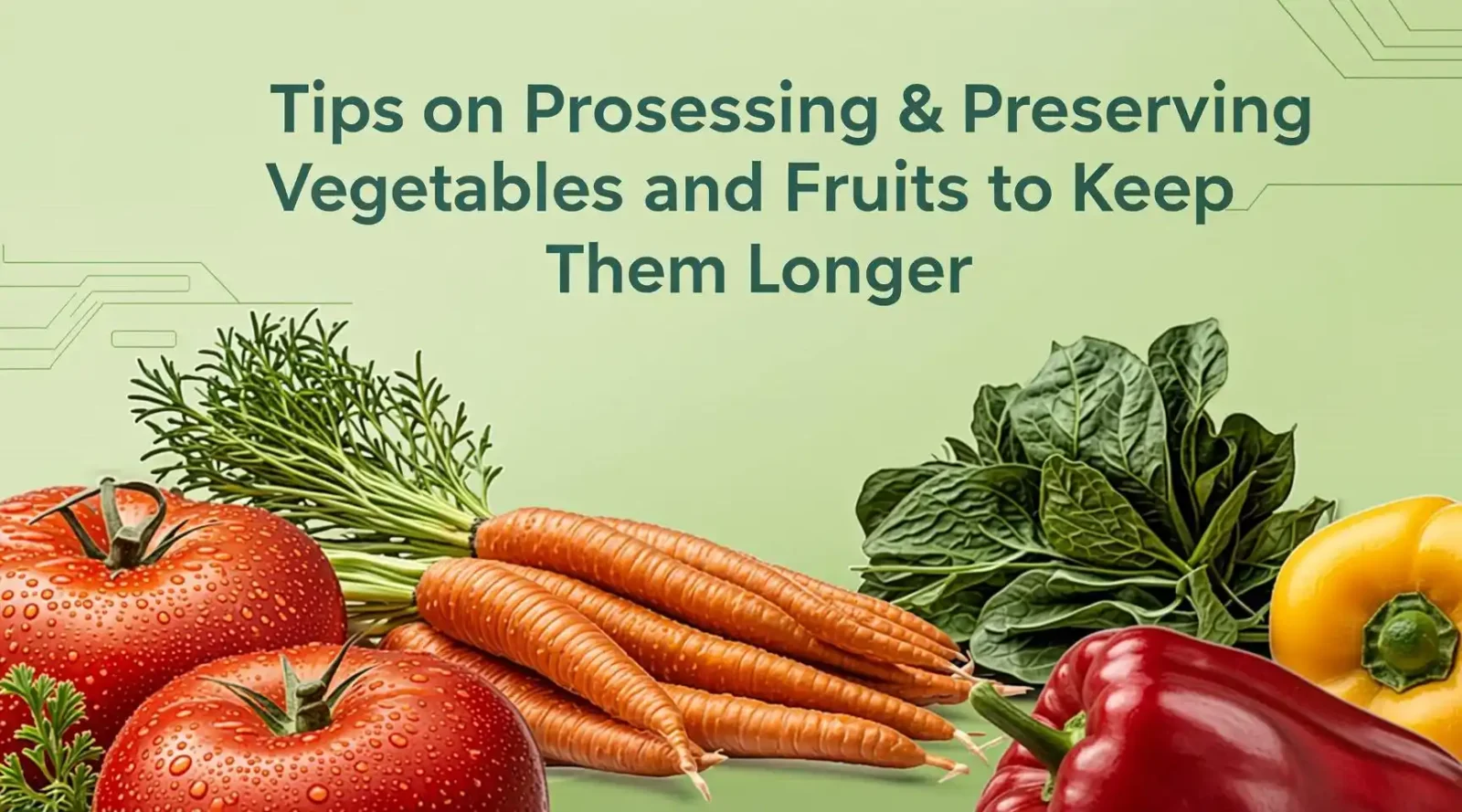
Tips on Processing & Preserving Vegetables and Fruits to Keep Them Longer
Meta Description
Discover expert, SEO‑optimized strategies for processing and preserving fresh vegetables and fruits. Learn safe blanching, freezing, canning, drying, and storage hacks that extend shelf life, maintain nutrition, and reduce food waste.
Keywords (6)
- Vegetable preservation techniques
- Fruit freezing tips
- Home canning safety
- How to blanch vegetables
- Long‑term food storage
- Nutrient‑rich produce preservation
Hashtags
#FoodPreservation #SeasonalProduce #HomeCanning #FreezerMeals #ZeroWasteKitchen #HealthyStorage
Disclaimer
The information provided on this page is for educational purposes only. While we strive for accuracy, individual results may vary based on equipment, climate, and personal skill level. Always follow the latest USDA/FSIS food safety guidelines and consult a qualified food‑safety professional before attempting any high‑risk preservation methods such as pressure canning.
Introduction
Whether you’re a busy professional, a health‑conscious family, or a culinary hobbyist, extending the life of fresh produce can save you money, reduce waste, and keep your meals nutrient‑dense all year round. This guide delivers actionable, SEO‑friendly tips on processing and preserving vegetables and fruits so you can enjoy garden‑fresh flavor long after the harvest season ends.
We’ll cover:
- The science behind spoilage
- Step‑by‑step blanching, freezing, canning, and drying
- Optimal storage containers and environments
- Quick‑reference tables for cooking times and safe storage periods
- Troubleshooting common pitfalls
Let’s dive in and transform your pantry into a long‑term food storage powerhouse.
- Understanding Why Produce Spoils
1.1 Enzymatic Activity
When vegetables and fruits are harvested, natural enzymes continue to break down cell walls, leading to softening, color loss, and nutrient degradation. Blanching inactivates these enzymes, creating a crucial first step for most preservation methods.
1.2 Microbial Growth
Bacteria, yeasts, and molds thrive in moist, warm environments. Proper temperature control—whether a freezer set at 0 °F (-18 °C) or a low‑oxygen canning jar—halts microbial proliferation.
1.3 Oxidation
Exposure to oxygen triggers browning (e.g., apples, potatoes) and vitamin loss, especially vitamin C and B‑complex. Vacuum‑sealed bags, airtight jars, or an acidulated water bath can limit oxidation.
- Core Preservation Techniques
2.1 Blanching – The Foundation for Freezing & Drying
| Vegetable | Boiling Time | Ice‑Bath Time | Tips |
| Green beans | 3 min | 2 min | Trim ends, snap before blanching |
| Carrots (sliced) | 2 min | 2 min | Cut uniform sticks for even cooking |
| Broccoli florets | 3 min | 3 min | Spread in a single layer for quick cooling |
| Spinach (whole) | 30 sec | 1 min | Use a slotted spoon to avoid over‑watering |
How to Blanch:
- Bring a large pot of water to a rolling boil.
- Add a pinch of kosher salt (enhances flavor & raises boiling point).
- Submerge vegetables for the prescribed time.
- Immediately transfer to an ice‑water bath to stop cooking.
- Drain thoroughly; pat dry with a clean kitchen towel or spin in a salad spinner.
Why it matters: Blanching preserves color, texture, and vitamins while destroying enzymes that cause spoilage.
2.2 Freezing – The Most Versatile Home Method
2.2.1 Choosing the Right Containers
- Flat‑freezer bags (quart size) – Ideal for portioning and rapid freeze.
- Heavy‑wall freezer jars – Best for liquids (smoothies, purees).
- Vacuum sealer – Removes 99% of air, extending freezer life up to 3 years for most produce.
2.2.2 “Fruit Freezing Tips” – Avoiding Ice Crystals
| Fruit | Prep | Freeze Method | Shelf Life |
| Strawberries | Slice, toss with 1 tbsp lemon juice | Single‑layer on tray → bag | 9‑12 months |
| Peaches | Peel, slice, sprinkle ½ tsp sugar | Pre‑freeze then bag | 8‑10 months |
| Corn kernels | Blanch 4 min | Bag with 1 tsp butter (optional) | 10‑12 months |
| Berries (mixed) | No prep needed | Directly into bags | 10‑12 months |
Best Practices:
- Freeze in portioned sizes (e.g., 1‑cup bags) for easy use.
- Label each bag with date, type, and intended use (e.g., “Smoothie – July 2026”).
- Keep the freezer at 0 °F or colder; avoid frequent door openings.
2.3 Home Canning – Shelf‑Stable, No‑Freezer Option
Important: Follow USDA‑approved recipes and pressure‑canner guidelines for low‑acid foods (vegetables, some fruits). Improper canning can cause botulism.
2.3.1 Water‑Bath Canning (For High‑Acid Produce)
Suitable for: Tomatoes, fruit jams, pickles, salsa.
Steps:
- Sterilize jars, lids, and rings in boiling water.
- Fill hot jars with prepared food, leaving ¼‑inch headspace.
- Remove air bubbles with a non‑metallic spatula.
- Wipe rims, place lids, screw on rings fingertip‑tight.
- Submerge jars in a boiling water bath; process for the time listed in your tested recipe (generally 10‑30 min).
- Remove, cool on a towel, and check seals after 24 h.
2.3.2 Pressure Canning (For Low‑Acid Vegetables)
Suitable for: Green beans, carrots, potatoes, corn, pumpkin.
Key Points:
- Use a pressure canner (not a pressure cooker).
- Process at 10 psi for altitudes ≤ 1,000 ft; increase pressure by 1 psi per 1,000 ft elevation.
- Typical processing times: 20 min for beans, 25 min for carrots, 30 min for pumpkin (all with ½‑inch headspace).
Safety Reminder: Always consult the latest USDA “Complete Guide to Home Canning” for exact times and pressures.
2.4 Drying & Dehydrating – Concentrated Flavor, Minimal Space
2.4.1 Sun‑Drying (Climate Dependent)
- Ideal for: Tomatoes, herbs, peppers.
- Requirements: Low humidity, > 85 °F, clean mesh screens, and insect‑proof covers.
2.4.2 Oven‑Drying
- Set oven to 140 °F (60 °C).
- Arrange slices on parchment‑lined trays; rotate every 30 min.
- Dry until brittle (10‑12 h for apple slices, 6‑8 h for herbs).
2.4.3 Electric Dehydrator
- Follow manufacturer’s temperature settings (usually 125‑135 °F).
- Store dried produce in mylar bags with oxygen absorbers for up to 2 years.
Tip: Pre‑blanch leafy greens for 1 min before drying to retain vibrant color and nutrients.
2.5 Fermentation – A Probiotic Preservation Method
Fermenting vegetables (e.g., sauerkraut, kimchi) creates an acidic environment that naturally preserves the food while adding beneficial bacteria.
Basic Process:
- Slice or shred produce (cabbage, carrots, radishes).
- Massage with 2 % salt (20 g salt per 1 kg of veg).
- Pack tightly into a fermentation crock or mason jar, ensuring vegetables stay submerged under brine.
- Cover with a weight, seal, and store at 65‑72 °F for 5‑14 days.
Result: Crunchy, tangy veggies that keep for 4‑6 months refrigerated.
- Optimizing Storage Environments
| Storage Type | Ideal Temperature | Relative Humidity | Recommended Containers |
| Freezer | 0 °F (‑18 °C) | < 30 % | Vacuum‑seal bags, heavy‑wall jars |
| Refrigerator (short‑term) | 34‑38 °F (1‑3 °C) | 85‑90 % | Crisper drawers, perforated produce bags |
| Pantry (canned goods) | 50‑70 °F (10‑21 °C) | 50‑60 % | Metal cans with sealed lids |
| Dry storage (dehydrated) | 50‑70 °F, dark | < 30 % | Mylar bags with oxygen absorbers |
| Fermentation | 65‑72 °F (18‑22 °C) | Ambient | Ceramic crocks or glass jars with airlocks |
Additional Tips:
- Keep a temperature log for freezers and pantries to catch fluctuations early.
- Rotate supplies using the “first‑in, first‑out” (FIFO) method; label each container with processing date and expected shelf life.
- Use silica gel packets in pantry boxes to control moisture, especially for dried herbs and powders.
- Quick Reference Tables
4.1 Freezer Shelf Life (General Guidelines)
| Food Group | Shelf Life (Months) |
| Berries | 10‑12 |
| Citrus (peeled) | 8‑10 |
| Cruciferous veg (blanched) | 9‑12 |
| Root veg (blanched) | 10‑12 |
| Peas & corn (blanched) | 12 |
| Fruit purees | 12 |
| Whole tomatoes (blanched) | 8‑10 |
4.2 Canning Processing Times (Altitude ≤ 1,000 ft)
| Food | Headspace | Processing Time (min) |
| Green beans (whole) | ½‑inch | 20 (pressure) |
| Carrots (sliced) | ½‑inch | 25 (pressure) |
| Tomatoes (whole) | ½‑inch | 45 (water bath) |
| Strawberry jam | ¼‑inch | 10 (water bath) |
| Pumpkin (cubes) | ½‑inch | 30 (pressure) |
(Always verify with current USDA guidelines.)
- Common Mistakes & How to Avoid Them
| Mistake | Consequence | Solution |
| Skipping blanching before freezing | Dark discoloration, mushy texture | Follow the blanching table; cool quickly. |
| Over‑packing jars for canning | Inadequate headspace → seal failure | Use the recommended headspace (¼‑½ inch). |
| Storing canned goods in a warm garage | Accelerated spoilage, possible botulism | Keep cans in a cool, dark pantry (≤ 75 °F). |
| Not labeling with dates | Food waste, confusion | Write date, type, and “best by” on every container. |
| Opening a jar before it’s fully sealed | Contamination risk | Wait 24 h; check lift of the lid – no flex = sealed. |
| Using non‑food‑grade containers for freezing | Leaching of chemicals, off‑flavors | Choose BPA‑free plastics or glass. |
- Eco‑Friendly & Cost‑Saving Benefits
- Reduced Food Waste: Proper preservation can cut household produce waste by up to 50 %.
- Lower Grocery Bills: Buying in bulk during peak season and preserving saves 30‑40 % annually.
- Less Energy Consumption: Freezing and dehydrating use less energy than daily refrigeration of fresh produce.
- Support Local Agriculture: Preserve farmer’s market finds and extend their availability.
- “Get Started” Checklist
| ✅ | Action |
| 1 | Clean and sanitize all jars, lids, and containers. |
| 2 | Gather a reliable food‑safety guide (USDA or extension service). |
| 3 | Set up a blanching station (large pot, ice bath, timer). |
| 4 | Invest in a quality vacuum sealer or freezer‑grade bags. |
| 5 | Label with waterproof marker and date. |
| 6 | Store in designated temperature zones. |
| 7 | Rotate stock every month; discard anything past its “best by.” |
- Frequently Asked Questions
Q1. How long can I keep blanched vegetables in the refrigerator before freezing?
A: Up to 24 hours if kept at 34‑38 °F. Longer storage can cause texture loss.
Q2. Can I freeze fresh herbs?
A: Yes—either chop and freeze in ice‑cube trays with oil or water, or dry and store in airtight containers.
Q3. Do canned foods need to be refrigerated after opening?
A: Absolutely. Transfer leftovers to a refrigerated airtight container and consume within 3‑5 days.
Q4. Is it safe to store canned goods in a basement that gets a bit damp?
A: Damp environments encourage rust and mold. Keep cans dry, on shelves, and off the floor.
Q5. What’s the best way to thaw frozen fruits for smoothies?
A: Transfer from freezer to refrigerator overnight or use the defrost function on your blender for quick results.
- Final Thoughts
Mastering vegetable preservation techniques and fruit freezing tips empowers you to enjoy garden‑fresh flavor all year while safeguarding your health and wallet. By blending science (blanching, temperature control) with reliable tools (vacuum sealers, pressure canners), you’ll build a resilient, nutrient‑rich pantry that stands up to seasonal fluctuations and unexpected supply chain hiccups.
Take the first step today—pick a batch of produce, follow the blanch‑and‑freeze method, and watch your freezer transform into a treasure chest of ready‑to‑use, nutrient‑rich produce preservation. Happy preserving!
For personalized advice, contact a certified food‑safety specialist or your local cooperative extension office.













Leave a comment