














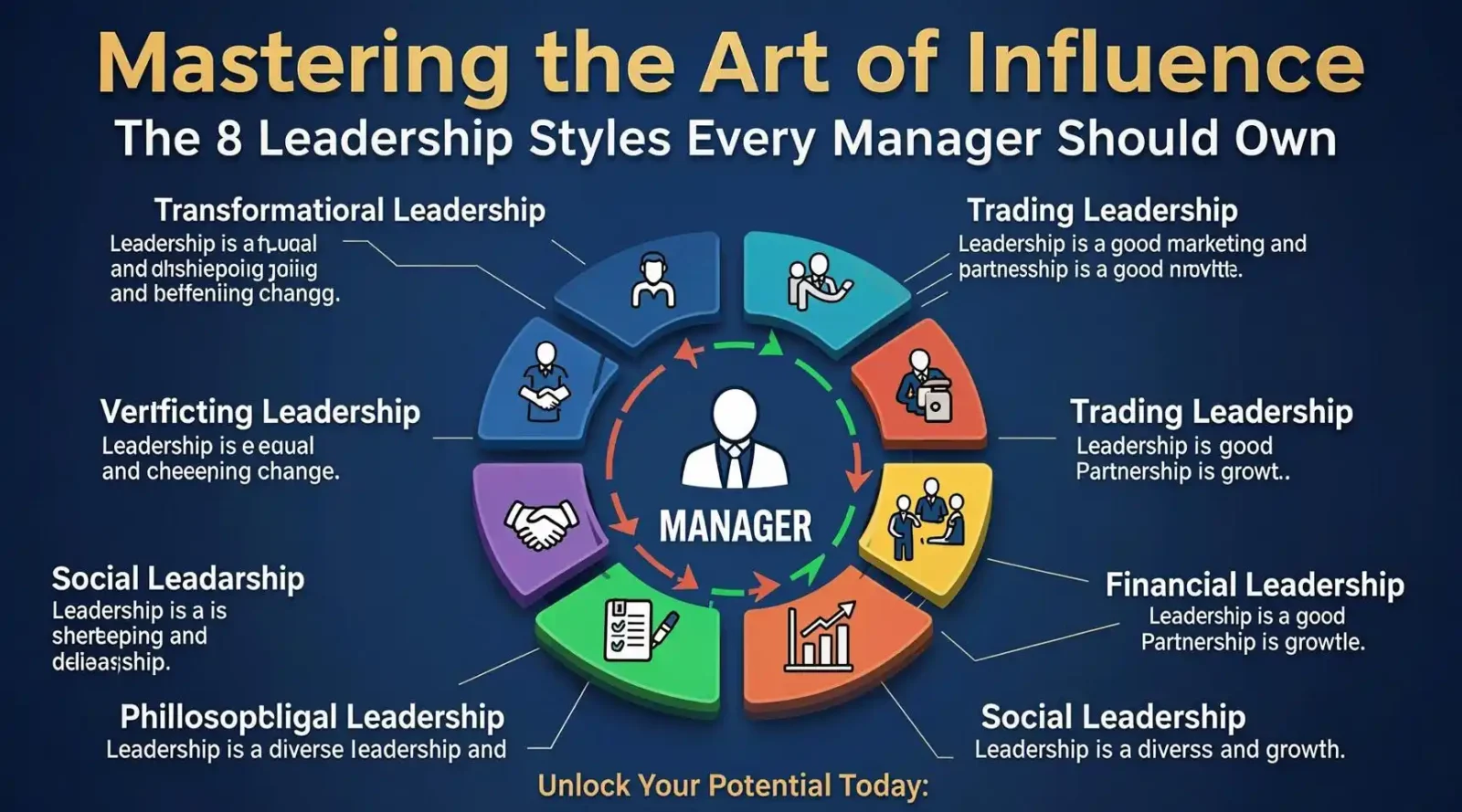
Mastering the Art of Influence – The 8 Leadership Styles Every Manager Should Own
Introduction
Leadership isn’t a one‑size‑fits‑all discipline. The most effective managers know that the “best” style depends on the situation, the people they lead, and the organizational goals they chase. Yet, paradoxically, many managers cling to a single approach—often the one they learned in school or the one that felt most natural early in their careers. That rigidity can stall growth, stifle innovation, and leave high‑potential talent feeling disengaged.
In today’s hyper‑connected, fast‑moving workplaces, agility in leadership is a decisive competitive advantage. By mastering eight distinct leadership styles, you’ll gain a flexible toolbox that lets you:
- Read the room and adapt instantly to shifting dynamics.
- Accelerate employee development by providing the right mix of guidance, autonomy, and challenge.
- Boost team performance across diverse projects, from crisis response to long‑term strategic initiatives.
In this deep‑dive, we’ll explore each style, outline the core behaviors that define it, and give you practical, actionable tips you can start using tomorrow. Whether you’re a first‑time supervisor or a seasoned executive, you’ll find fresh insights that help you become the kind of leader people choose to follow.
- The Visionary (Strategic) Leader
What It Looks Like
A Visionary leader paints a compelling picture of the future and rallies the team around that shared purpose. This style is grounded in strategic thinking, long‑term foresight, and an innate ability to translate abstract ideas into concrete goals.
When to Deploy
- Launching a new product line or entering an uncharted market.
- Organizational change initiatives where alignment is crucial.
- When the team appears directionless or stuck in day‑to‑day firefighting.
Core Behaviors
| Behavior | How It Helps the Team |
| Storytelling – crafting narratives that connect the “why” with everyday actions. | Turns abstract objectives into personal motivators. |
| Future‑mapping – using scenario planning and roadmaps. | Provides clarity on milestones and reduces uncertainty. |
| Inspiring ownership – inviting team members to co‑create the vision. | Boosts commitment and uncovers hidden talent. |
Practical Tips
- Create a “Vision Board” – A visual, single‑page summary of the 3‑5 year horizon (market trends, mission, key metrics). Review it weekly in stand‑ups.
- Host “Future Fridays” – 30‑minute sessions where you discuss emerging trends, solicit ideas, and align them with the vision.
- Link daily tasks to the big picture – End every meeting by asking, “How does what we just discussed move us closer to our vision?”
- The Coach (Developmental) Leader
What It Looks Like
Coaching leaders focus on individual growth and skill development. They ask powerful questions, provide constructive feedback, and design learning experiences that stretch capability without overwhelming.
When to Deploy
- High‑potential employees who are ready for the next step.
- Performance plateaus where skill gaps are visible.
- In knowledge‑intensive environments (e.g., tech, consulting, research) where continuous learning is a competitive necessity.
Core Behaviors
| Behavior | How It Helps the Team |
| Active listening – truly hearing concerns, aspirations, and ideas. | Builds trust and uncovers intrinsic motivators. |
| SMART feedback loops – Specific, Measurable, Achievable, Relevant, Time‑bound. | Clarifies expectations and accelerates improvement. |
| Personal development plans (PDPs) – co‑crafted roadmaps with milestones. | Provides a clear pathway for advancement. |
Practical Tips
- Adopt the “GROW” model (Goal, Reality, Options, Way forward) for every one‑on‑one.
- Schedule quarterly skill‑audit workshops where team members self‑rate and then set actionable goals.
- Create a “Peer Coaching Circle” – small groups rotate as mentors every month, fostering lateral learning.
- The Democratic (Participative) Leader
What It Looks Like
Democratic leaders harness collective intelligence by inviting input before making decisions. They value transparency, shared ownership, and foster a culture where dissent is safe and constructive.
When to Deploy
- Cross‑functional projects that require diverse expertise.
- Situations where buy‑in is essential for execution (e.g., process redesign).
- Teams that are highly experienced and crave autonomy.
Core Behaviors
| Behavior | How It Helps the Team |
| Structured brainstorming – using techniques like “6‑3‑5” or “Nominal Group”. | Generates varied ideas quickly and reduces groupthink. |
| Voting mechanisms – anonymous polls or weighted scoring. | Turns opinion into actionable direction while preserving fairness. |
| Transparent rationale – explaining why certain inputs were weighted more. | Reinforces trust that decisions are data‑driven, not arbitrary. |
Practical Tips
- Implement “Decision‑By‑Design” – present a problem, gather options, then run a quick, timed poll before finalizing.
- Use digital collaboration tools (Miro, Mural, Google Jamboard) to capture real‑time input during meetings.
- Rotate facilitation duties – let different team members lead the meeting agenda, ensuring diverse leadership exposure.
- The Servant Leader
What It Looks Like
Servant leadership flips the traditional power hierarchy: the leader’s primary goal is to serve the team—removing obstacles, fostering well‑being, and empowering others to shine.
When to Deploy
- In high‑stress environments (e.g., healthcare, emergency response) where morale is fragile.
- When employee retention is a strategic priority.
- Teams composed of self‑directed professionals who thrive when given space.
Core Behaviors
| Behavior | How It Helps the Team |
| Barrier removal – actively seeking out and eliminating roadblocks. | Allows talent to focus on value‑adding work. |
| Empathy listening – acknowledging personal challenges and offering support. | Boosts psychological safety and loyalty. |
| Resource championing – advocating for tools, training, or budget on behalf of the team. | Demonstrates commitment to employee success. |
Practical Tips
- Conduct “Obstacle Audits” – a weekly 10‑minute check‑in where team members list anything slowing them down; you commit to actionable resolutions.
- Implement a “Well‑Being Budget” – allocate a small quarterly fund for team wellness activities (massage therapist, mindfulness apps, gym passes).
- Lead by example – take on mundane tasks (e.g., filing paperwork) occasionally to show you’re willing to roll up your sleeves.
- The Transformational Leader
What It Looks Like
Transformational leaders inspire extraordinary performance by elevating individuals’ sense of purpose and aligning personal values with organizational goals. They focus heavily on charisma, inspirational motivation, and intellectual stimulation.
When to Deploy
- Turnaround scenarios where morale is low and change is needed.
- When you want to spark innovation and break away from legacy ways of working.
- High‑growth phases (e.g., scaling a startup) requiring rapid, enthusiastic adoption of new practices.
Core Behaviors
| Behavior | How It Helps the Team |
| Idealized influence – acting as a role model with high ethical standards. | Sets a cultural benchmark for behavior. |
| Inspirational motivation – frequent visionary communication and celebration of wins. | Generates excitement and a “can‑do” mindset. |
| Intellectual stimulation – encouraging experimentation and challenging assumptions. | Drives continuous improvement and innovation. |
Practical Tips
- Create “Innovation Hours” – dedicated time each week where team members pursue passion projects related to the business.
- Celebrate “Learning Failures” – publicly acknowledge attempts that didn’t work, extracting lessons and rewarding risk‑taking.
- Develop a personal leadership manifesto – a one‑page statement of your core values and vision; share it with the team to set tone.
- The Transactional (Performance‑Focused) Leader
What It Looks Like
Transactional leadership leans on clear structures, rewards, and consequences. It works best in environments where compliance, consistency, and operational efficiency are paramount.
When to Deploy
- Production or compliance‑driven teams (manufacturing, finance, call centers).
- Situations that demand strict deadlines and minimal deviation from protocols.
- When new hires need clear expectations to quickly reach competence.
Core Behaviors
| Behavior | How It Helps the Team |
| Clear KPIs and metrics – defined, measurable targets tied to compensation or recognition. | Provides transparent expectations and motivates performance. |
| Contingent rewards – bonuses, praise, or promotions linked directly to outcomes. | Aligns individual effort with organizational goals. |
| Corrective feedback – swift, fact‑based interventions when standards slip. | Reduces ambiguity and maintains quality. |
Practical Tips
- Implement a “Scorecard Dashboard” – visual daily/weekly KPI tracking visible to the whole team.
- Introduce a “Spot‑Bonus” system – instant micro‑rewards for exceeding targets (gift cards, extra PTO).
- Schedule “Compliance Clinics” – short refresher sessions on policies, standards, and best practices to prevent drift.
- The Laissez‑Faire (Empowering) Leader
What It Looks Like
Laissez‑Faire leadership provides maximum autonomy, trusting professionals to self‑manage and innovate without frequent oversight. This style thrives when the team possesses deep expertise and intrinsic motivation.
When to Deploy
- Highly skilled knowledge workers (senior engineers, research scientists).
- Creative departments where artistic freedom fuels better outcomes.
- When you need rapid, decentralized decision‑making (e.g., in a global matrix organization).
Core Behaviors
| Behavior | How It Helps the Team |
| Delegated authority – assigning full ownership of projects with minimal micromanagement. | Encourages accountability and originality. |
| Supportive resource provision – ensuring tools, budgets, and information are readily available. | Removes friction that could stifle creativity. |
| Outcome‑focused check‑ins – periodic reviews based on results, not process. | Keeps alignment without choking autonomy. |
Practical Tips
- Set “North Star” objectives – high‑level goals that guide decisions while leaving tactics open.
- Create a “Resource Hub” – a centralized library of templates, APIs, data sets, and contacts they can pull from instantly.
- Use “Results Review” meetings – quarterly, focus purely on outcomes, lessons learned, and next steps; skip status updates.
- The Adaptive (Situational) Leader
What It Looks Like
Adaptive leaders are chameleons of management: they assess the context, diagnose the readiness of their team, and then blend elements from other styles to suit the moment. This is not a separate style so much as a meta‑skill—the ability to choose the right style.
When to Deploy
- Complex, ambiguous problems where a single approach won’t suffice.
- During crises where rapid decision‑making must be balanced with empathy.
- When you lead multigenerational, multicultural teams with varying expectations.
Core Behaviors
| Behavior | How It Helps the Team |
| Situational assessment – using tools like the Hersey‑Blanchard matrix to gauge competence & commitment. | Aligns leadership intensity with employee development stage. |
| Flexibility in communication – shifting tone, medium, and frequency based on urgency and audience. | Keeps messages clear, relevant, and resonant. |
| Continuous learning loop – soliciting feedback on your own style and adjusting fast. | Models the adaptive mindset you expect from the team. |
Practical Tips
- Develop a “Leadership Playbook” – a one‑page cheat sheet that maps common scenarios (e.g., low morale, high‑stakes deadline) to the style(s) that work best. Keep it in your phone’s notes for quick reference.
- Run “Style Reflection” retrospectives after major projects: ask the team “Which leadership approaches helped? Which hindered?” and adjust accordingly.
- Invest in your own coaching – regular 360° feedback sessions keep you honest about whether you’re truly adaptable.
Integrating the Eight Styles: A Roadmap for Your Leadership Journey
Step 1 – Self‑Audit
- Rate your current usage of each style on a 1–5 scale.
- Identify gaps (e.g., you score 4 on Transactional but 1 on Servant).
Step 2 – Align with Business Needs
- Map your organization’s strategic priorities (innovation, compliance, growth) to the styles that support them.
- Set quarterly personal objectives: “Increase use of Democratic leadership in cross‑functional projects from 0 to 3 times per month.”
Step 3 – Practice Deliberately
- Pick one style per week to focus on. Use the practical tips above as your daily checklist.
- Record observations in a leadership journal: What worked? What resistance surfaced?
Step 4 – Solicit Feedback
- Use anonymous pulse surveys or quick “thumbs‑up/down” after meetings to gauge how team members perceived your approach.
- Ask for specific suggestions: “What could I do to make my coaching moments more effective?”
Step 5 – Iterate
- Review data monthly. Celebrate wins (e.g., “Recognition of Visionary leadership increased engagement by 12%”).
- Adjust your leadership development plan and repeat the cycle.
Common Pitfalls to Avoid
| Pitfall | Why It Happens | How to Counteract |
| Style rigidity – sticking to one favorite style regardless of context. | Comfort zone, fear of appearing inconsistent. | Keep a “Style Dashboard” visible; schedule weekly reflection. |
| Over‑coaching – micromanaging under the guise of development. | Good intentions, lack of trust. | Set clear boundaries: coaching minutes vs. execution minutes. |
| Neglecting follow‑through – delivering vision but not providing resources. | Excitement outweighs operational planning. | Pair every vision statement with a “Resource Allocation” checklist. |
| Misreading team readiness – using Democratic style with inexperienced staff. | Assumption that autonomy = empowerment. | Conduct a quick competence/commitment survey before choosing style. |
| Failing to model – saying you value servant leadership but hoarding decision‑making. | Habitual power dynamics. | Practice “decision delegation logs” and review them with your manager. |
The Bottom Line
Mastering all eight leadership styles isn’t about becoming a jack‑of‑all‑trades; it’s about expanding your influence toolkit so you can meet any challenge head‑on. The most resilient managers are those who fluidly shift from visionary storytelling to laser‑focused transactional oversight, from empowering laissez‑faire freedom to empathetic servant support—all while staying rooted in a clear sense of purpose.
Invest time today to assess, practice, and refine these styles. In doing so, you’ll not only elevate your own performance but also cultivate a high‑performing, engaged, and future‑ready team that thrives under any circumstance.
Quick Reference Cheat Sheet (Print & Pin)
| Style | Core Goal | Ideal Situation | 2‑Minute Action |
| Visionary | Align to a compelling future | New strategy rollout | Share a 30‑second “Why this matters” story |
| Coach | Accelerate individual growth | High‑potential development | Ask “What’s one skill you’d love to master this quarter?” |
| Democratic | Harness collective intelligence | Cross‑functional projects | Post a poll with 3 options for the next step |
| Servant | Remove obstacles, boost well‑being | High‑stress periods | Ask “What’s one thing I can take off your plate?” |
| Transformational | Inspire extraordinary performance | Turnaround or growth sprint | Celebrate a “Win of the Week” loudly |
| Transactional | Ensure compliance & efficiency | Production or regulated work | Review KPI dashboard together |
| Laissez‑Faire | Empower self‑management | Senior experts, creative work | Set a North‑Star goal, then step back |
| Adaptive | Match style to context | Ambiguity & crisis | Run a rapid “Style Check” before making a decision |
3 Keywords for SEO
- Leadership styles
- Managerial effectiveness
- Team empowerment
Hashtags
#Leadership #Management #TeamSuccess
Disclaimer
The content presented in this article is for general educational and informational purposes only. It does not constitute professional advice, nor should it be construed as a substitute for consulting with qualified leadership coaches, HR professionals, or legal counsel. Individual results may vary based on organizational culture, industry, and personal circumstances.

Review Overview
Summary
Pellentesque iaculis gravida nulla ac hendrerit. Vestibulum faucibus neque at lacus tristique eu ultrices ipsum mollis. Phasellus venenatis, lacus in malesuada pellentesque, nisl ipsum faucibus velit, et eleifend velit nulla a mi. Praesent pharetra semper purus, a vehicula massa interdum in.
The Pros
Eclectic and evocative soundtrack Rhythm gameplay Tough challengeThe Cons
Woefully out of place Pacing slows Exploration sequences feel drawn out- Design4.5
- Usage4
- Document4.5








Leave a comment