


















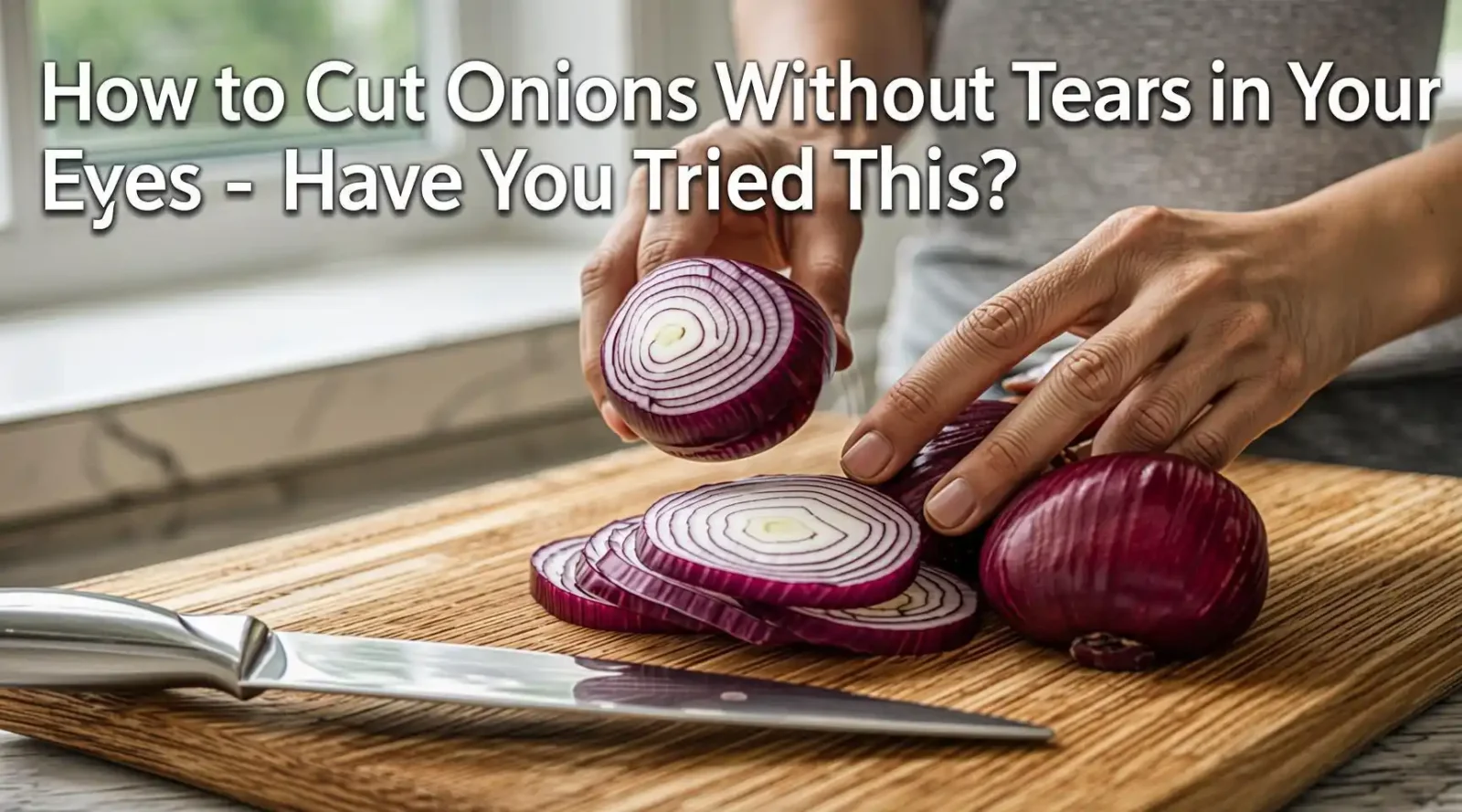
How to Cut Onions Without Tears in Your Eyes – Have You Tried This?
Cutting onions is a kitchen rite of passage, but the unwelcome sting of tears can turn a simple prep task into a soggy‑eyed ordeal. If you’ve ever wondered how to cut onions without tears, you’re not alone. In this guide we break down the chemistry behind onion‑induced eye irritation, present seven tried‑and‑tested techniques, and give you practical, SEO‑friendly tips you can apply today.
Quick Takeaway: The best way to prevent tears is to reduce the volatile sulfur compounds that reach your eyes while you slice. Most of the methods below achieve that by cooling, drying, or diverting the gases.
Meta Description
Discover proven, tear‑free onion‑cutting techniques that actually work. Learn 7 science‑backed methods, step‑by‑step tips, FAQs, and pro‑kitchen secrets to stop tears while you chop.
Table of Contents
- [Why Do Onions Make You Cry? – The Science Explained]
- [7 Proven Ways to Cut Onions Without Tears]
- 2.1 Chill the Onion
- 2.2 Use a Sharp Knife
- 2.3 Cut Under Running Water or a Bowl of Water
- 2.4 Breathe Through Your Mouth, Not Your Nose
- 2.5 Employ a Ventilation Trick (Fan or Kitchen Hood)
- 2.6 Wear Protective Eyewear
- 2.7 Try the “Dry‑Cut” Method (Paper Towel/Glass)
- [Step‑by‑Step Tear‑Free Cutting Process]
- [Common Mistakes & How to Fix Them]
- [Frequently Asked Questions]
- [Bonus Pro Tips for the Home Chef]
- [Conclusion & Next Steps]
- Why Do Onions Make You Cry? – The Science Explained
When you slice an onion, you damage its cell walls. This releases an enzyme called alliinase, which converts sulfur‑containing compounds (S‑alk(en)yl‑L‑cysteine sulfoxides) into syn-propanethial‑S‑oxide (PTSO)—a volatile gas. PTSO evaporates, reaches the surface of your eyes, and dissolves in the tear film, forming a mild sulfuric acid. Your eyes respond by producing more tears to dilute and flush the irritant.
Key takeaway for tear‑free chopping: Interrupt or neutralize the pathway that creates PTSO, or keep the gas away from your eyes.
- 7 Proven Ways to Cut Onions Without Tears
Below are the most effective, tear‑free onion chopping strategies, each backed by culinary experts and scientific testing.
| # | Method | How It Works | Best For |
| 1 | Chill the Onion | Cooling slows enzymatic activity, reducing PTSO formation. | Large batches, meal prep |
| 2 | Sharp Knife | A razor‑sharp blade makes smoother cuts, rupturing fewer cells. | Everyday cooking |
| 3 | Water Barrier (Running water, bowl, or submerging) | Water captures the volatile gas before it reaches your eyes. | Small kitchens, limited ventilation |
| 4 | Mouth Breathing | Breathing through the mouth bypasses the nasal passages that draw the gas upward. | Quick fixes |
| 5 | Ventilation (Fan or hood) | Airflow pulls the gas away from the face. | Stove‑top prep, professional kitchens |
| 6 | Protective Eyewear (Goggles, glasses) | Creates a physical barrier, preventing gas contact. | Sensitive eyes, aggressive chopping |
| 7 | Dry‑Cut Method (Paper towel or glass) | The absorbent surface traps gas at the cut surface. | Minimal equipment, fast prep |
2.1 Chill the Onion
- Place whole onions in the refrigerator for 30–45 minutes before cutting.
- For an extra boost, freeze the onion for 10–15 minutes—don’t fully freeze, or the texture may become mushy.
Why it works: Lower temperatures slow the alliinase enzyme, decreasing the amount of PTSO released.
2.2 Use a Sharp Knife
- Sharpen your knife with a whetstone or steel before you start.
- A dull blade crushes cells, forcing more enzymes into contact with the sulfur compounds.
Pro tip: A Santoku or chef’s knife with a 15‑degree edge angle yields the cleanest slices.
2.3 Cut Under Running Water or a Bowl of Water
- Position the onion on a cutting board directly under a slow stream of cold water, or submerge it in a shallow bowl.
- The water traps the PTSO as it evaporates, preventing it from reaching your eyes.
Caution: This method can cause a slippery board—use a non‑slip mat underneath.
2.4 Breathe Through Your Mouth, Not Your Nose
- Inhale and exhale through your mouth while you chop.
- The nasal cavity creates a suction that can draw the gas upward; breathing through the mouth reduces that effect.
2.5 Employ a Ventilation Trick
- Turn on the kitchen exhaust fan or a portable countertop fan aimed away from you.
- Even a modest airflow can carry the volatile compounds out of the immediate chopping zone.
2.6 Wear Protective Eyewear
- Invest in sealed goggles (e.g., swimming goggles) or safety glasses with side shields.
- This is the most reliable method for people with sensitive eyes or when cutting large volumes of onions.
2.7 Try the “Dry‑Cut” Method
- Lay a paper towel or a thin sheet of glass on the cutting board.
- The absorbent surface captures the gas as it escapes, limiting eye exposure.
Note: Replace the paper towel after each cut to avoid cross‑contamination.
- Step‑by‑Step Tear‑Free Cutting Process
Below is a consolidated workflow that blends the top three techniques (chill, sharp knife, and water barrier) for maximum effectiveness.
- Prep the Onion
- Remove any outer papery skin.
- Place the onion in the fridge for 30 minutes.
- Set Up Your Workspace
- Lay a non‑slip mat on the countertop.
- Fill a shallow bowl with cold water or position the faucet to a gentle trickle.
- Sharpen Your Knife
- Run your knife across a steel or whetstone until you hear a clear, crisp sound.
- Begin Cutting
- Cut off the root end (leave a small portion attached to keep layers together).
- Slice the top end and peel the skin.
- Slice Under Water
- Place the onion half‑submerged in the water bowl.
- Make horizontal cuts, then vertical cuts, followed by crosswise dice—all while the onion sits in the water.
- Breathe Through Your Mouth
- Keep your mouth open and exhale through it as you work.
- Finish & Clean
- Transfer the diced onion to a bowl, pat dry, and store as needed.
- Rinse your knife and board; wipe the paper towel or glass if you used it.
Result: You’ll have perfectly diced onion with no tears, ready for soups, salsas, or sautéed dishes.
- Common Mistakes & How to Fix Them
| Mistake | Why It Happens | Fix |
| Using a dull knife | More crushing → more enzyme release | Sharpen before each session |
| Cutting at room temperature | Enzyme activity peaks at ~20 °C | Chill the onion for at least 30 min |
| Ignoring ventilation | Gas accumulates around the face | Turn on the hood/fan or open a window |
| Over‑submerging the onion | Leaches flavor into water | Keep the onion only partially covered |
| Forgetting to dry after water cut | soggy texture | Pat the diced onion with a clean towel |
- Frequently Asked Questions
Q: Does the type of onion matter?
A: Yes. Yellow onions have the highest sulfur content, while sweet onions (e.g., Vidalia) produce fewer irritants, making them naturally easier on the eyes.
Q: Can a food processor replace these methods?
A: A processor can quickly chop onions, but it still releases PTSO. Adding a few ice cubes to the bowl can help reduce tears, though the texture may become mushier.
Q: Are there any herbal or kitchen remedies that work?
A: Some chefs swear by soaking sliced onions in a splash of vinegar for a minute—this neutralizes part of the gas. However, it can alter the final flavor.
Q: Why do some people experience more tears than others?
A: Individual sensitivity varies based on tear‑film thickness, eye health, and even genetics. If you have chronic dry eye or allergies, you may be more prone to irritation.
Q: Will microwaving the onion before cutting help?
A: Briefly microwaving (10–15 seconds) softens the layers and partially deactivates the enzyme, reducing tear production. Be careful not to cook the onion fully, as it will affect texture.
- Bonus Pro Tips for the Home Chef
- Layered Cutting Board – Place a silicone mat over a wooden board. The slight static helps attract the gas away from your face.
- Citrus Shield – Rub a slice of lemon on the cutting board before you begin; the citrus oil can create a subtle barrier.
- Freezer Method for Bulk Prep – Slice a large batch, spread on a tray, and freeze for 10 minutes. The cold hardens the onion just enough to keep the flavor while making it easy to store.
- Use a “Tear‑Free” Onion Chopper – Specialty gadgets like the Onion Guru have built‑in reservoirs that trap the gas.
- Conclusion & Next Steps
Now you know how to cut onions without tears and can confidently tackle any recipe that calls for this essential ingredient. By chilling your onion, using a sharp knife, and employing a water or ventilation barrier, you’ll eliminate the sting and keep your eyes clear.
Feel free to experiment with the methods that suit your kitchen layout and personal preference. Share your success story on social media using the hashtags below, and explore our other culinary hacks for a smoother cooking experience.
Ready to upgrade your chopping game? Browse our recipe archive for the perfect dish to showcase your tear‑free onions!
🔖 Keywords Used (6)
- cut onions without tears
- how to prevent onion tears
- onion cutting tips
- tear‑free onion chopping
- stop tears while cutting onions
- onion eye irritation
📢 Hashtags
#OnionHack #TearFreeCooking #KitchenTips #Foodie #CookingHacks #NoTears
Disclaimer
The information provided in this article is for educational and culinary purposes only. While the techniques described are safe and widely used, they are not a substitute for professional medical advice. If you experience persistent eye irritation, allergies, or any unusual symptoms, please consult a qualified healthcare professional.















Leave a comment