

















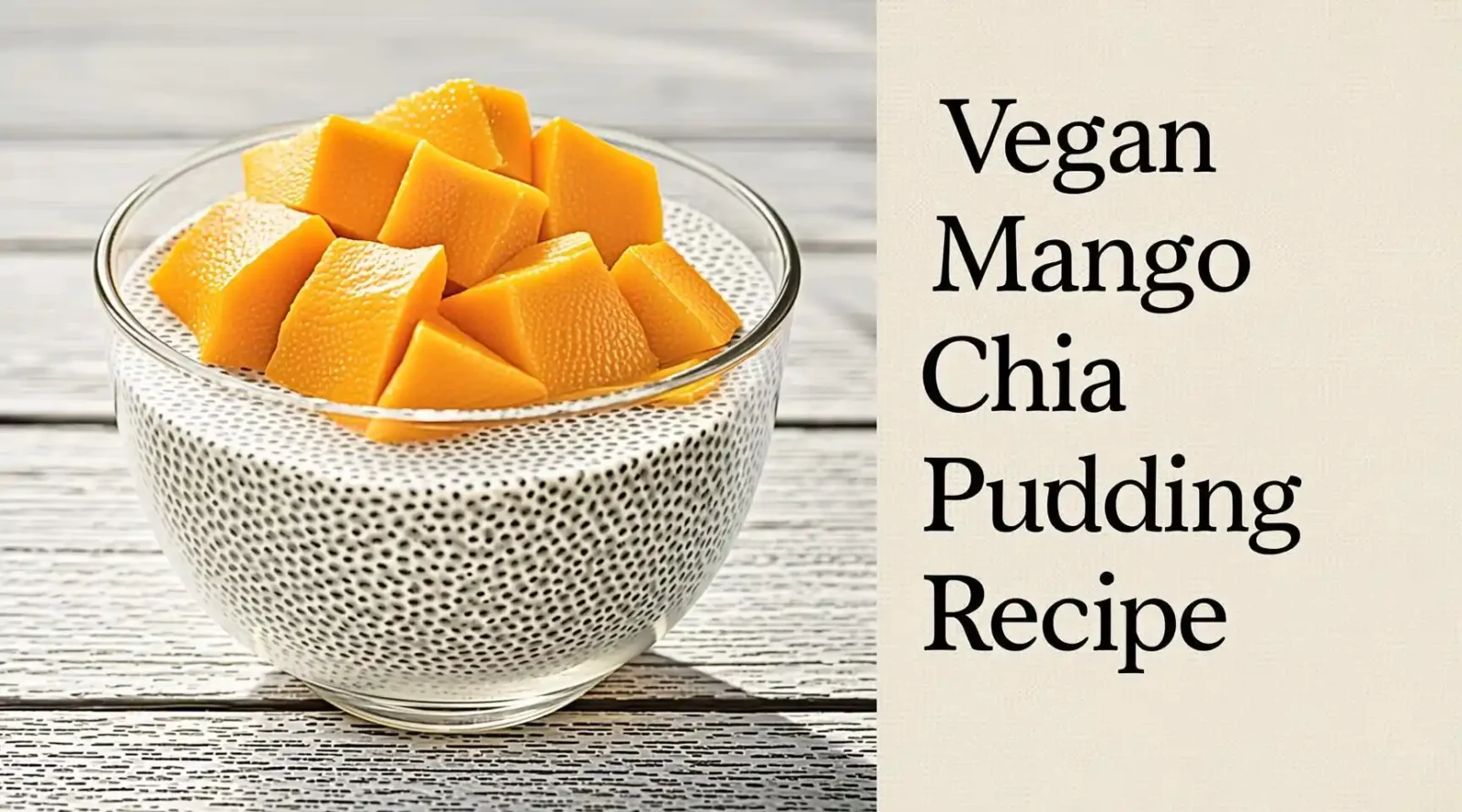
Vegan Mango Chia Pudding: A Tropical, Creamy Delight You’ll Want to Make Every Day
Meta Description
A step‑by‑step vegan mango chia pudding recipe that’s dairy‑free, protein‑packed, and bursting with tropical flavor—perfect for breakfast, snack, or dessert.
Introduction
If you’ve ever dreamed of a breakfast that feels like a mini‑vacation, look no further. This vegan mango chia pudding combines the silky texture of classic chia seed pudding with the bright, sun‑kissed sweetness of ripe mangoes. It’s a dairy‑free dessert that’s not only visually stunning but also nutritionally balanced, making it an ideal healthy breakfast, plant‑based snack, or guilt‑free treat after dinner.
In this long‑form guide (≈ 2,500 words), you’ll discover:
- Why chia seeds are a nutritional powerhouse – and how they turn liquid into a creamy “pudding” without any gelatin or eggs.
- The health benefits of mango – from vitamin C to antioxidants that support skin and immunity.
- A fool‑proof, step‑by‑step recipe that even beginners can master.
- Tips for customizing the pudding for different dietary needs or flavor preferences.
- Nutritional breakdown, storage instructions, and FAQs to keep you confident in the kitchen.
Grab a bowl, a spoon, and let’s dive into the tropical goodness of this vegan mango chia pudding.
Table of Contents
- The Science Behind Chia Seeds – Why They Gel
- Mango Magic – Nutrients that Make a Difference
- Ingredient List & Tools You’ll Need
- Step‑by‑Step Instructions
- Customizing Your Pudding: Variations & Add‑Ons
- Nutritional Information (Per Serving)
- Storing & Reheating Tips
- Frequently Asked Questions
- Conclusion: Make It a Habit, Not a Hassle
- Keywords, Hashtags & Disclaimer
- The Science Behind Chia Seeds – Why They Gel
Chia seeds (Salvia hispanica) have been a staple in Central American diets for centuries. What makes them extraordinary is their hydrophilic fiber—each tiny seed can absorb up to 12 times its weight in liquid. When you soak them, the soluble fiber forms a mucilaginous coating, creating a gel that mimics the texture of a custard or pudding.
Key benefits of this gel:
| Benefit | How it Helps You |
| Satiety | The gel expands in the stomach, slowing digestion and keeping you fuller longer. |
| Blood‑Sugar Regulation | High fiber slows glucose absorption, reducing spikes. |
| Digestive Health | Prebiotic fiber feeds beneficial gut bacteria. |
| Omega‑3 Fatty Acids (ALA) | Supports heart health and reduces inflammation. |
| Protein Boost | Approximately 4 g of plant‑based protein per ounce of dry seeds. |
Because the gel forms without heat or added gums, chia pudding is an ideal base for raw, vegan desserts. Pair it with fruit, nuts, or spices, and you have a versatile canvas.
- Mango Magic – Nutrients that Make a Difference
Mangoes are more than just a sweet, juicy fruit; they’re a nutrient powerhouse that complements chia’s benefits perfectly.
| Nutrient | Approx. Amount per 1 cup diced mango | Health Impact |
| Vitamin C | 60 mg (≈ 100 % DV) | Antioxidant, collagen synthesis, immune support |
| Vitamin A (β‑carotene) | 1,200 IU (≈ 24 % DV) | Vision health, skin repair |
| Folate (Vitamin B9) | 71 µg (≈ 18 % DV) | DNA synthesis, fetal development |
| Potassium | 250 mg (≈ 7 % DV) | Electrolyte balance, blood pressure control |
| Dietary Fiber | 2.6 g (≈ 10 % DV) | Digestive health, cholesterol management |
| Antioxidants (Mangiferin, Quercetin) | Variable | Anti‑inflammatory, may lower cancer risk |
The natural sweetness of mango means you can reduce or even eliminate added sweeteners, keeping the pudding low‑calorie yet indulgent.
- Ingredient List & Tools You’ll Need
Core Ingredients (Makes 4 servings)
| Quantity | Ingredient | Why It Matters |
| 1/2 cup | Chia seeds (organic, unsweetened) | Gel formation, fiber, omega‑3 |
| 1 ½ cups | Coconut milk (full‑fat or light) | Creamy texture, dairy‑free fat |
| 1 cup | Mango puree (fresh or frozen, thawed) | Natural sweetness, tropical flavor |
| 2 Tbsp | Maple syrup or agave (optional) | Light natural sweetener |
| 1 tsp | Vanilla extract | Aroma, depth |
| Pinch | Sea salt | Balances sweetness |
| Optional toppings: toasted coconut flakes, sliced almonds, fresh mango cubes, mint leaves | — | Crunch, visual appeal, extra nutrients |
Tools
- Blender or food processor (for smooth mango puree)
- Medium mixing bowl (preferably glass)
- Whisk or fork (to combine chia & liquid)
- Measuring cups & spoons
- Four serving jars or ramekins (for overnight chilling)
- Step‑by‑Step Instructions
Pro tip: You can prepare the pudding the night before. This not only saves time in the morning but also allows the chia seeds to fully absorb the liquid, resulting in a smoother texture.
Step 1 – Prepare the Mango Puree
- If using fresh mango: Peel, pit, and dice 2 medium mangoes (≈ 1 ½ cups).
- If using frozen: Thaw 1 ½ cups of mango chunks in the refrigerator or microwave (30 seconds).
- Add the mango pieces to a blender with a splash of coconut milk (≈ ¼ cup) to help it blend.
- Blend on high until ultra‑smooth, stopping to scrape down sides as needed.
- Taste; if you prefer a sweeter pudding, add a drizzle of maple syrup and blend briefly.
Yield: About 1 cup of mango puree.
Step 2 – Combine the Liquid Base
- In a medium bowl, pour the remaining 1 ¼ cups of coconut milk.
- Add vanilla extract, sea salt, and the optional sweetener (maple syrup or agave).
- Whisk until everything is fully incorporated.
Step 3 – Add the Chia Seeds
- Sprinkle ½ cup of chia seeds evenly over the coconut‑milk mixture.
- Whisk vigorously for 1‑2 minutes. The seeds will start to clump, but that’s normal.
Step 4 – Fold in the Mango Puree
- Gently fold the mango puree into the chia‑coconut mixture using a spatula.
- Ensure an even distribution of color—some streaks are okay; they’ll swirl beautifully as the pudding sets.
Step 5 – Chill & Set
- Divide the mixture evenly among four jars or ramekins.
- Seal each container with a lid or plastic wrap.
- Place in the refrigerator for at least 4 hours, preferably overnight.
What happens during chilling?
The chia seeds continue soaking, expanding to a gel-like consistency that thickens the entire mixture into a pudding‑like texture.
Step 6 – Finish & Serve
- Before serving, give each jar a quick stir to loosen any settled layers.
- Top with your favorite toppings: toasted coconut, sliced almonds, fresh mango cubes, a sprig of mint, or a drizzle of extra fruit‑puree.
- Enjoy cold, or let sit at room temperature for a few minutes if you prefer a softer texture.
- Customizing Your Pudding: Variations & Add‑Ons
Your vegan mango chia pudding can be a versatile platform for endless creativity. Below are popular variations that keep the recipe dairy‑free, vegan, and nutrient‑dense.
| Variation | How to Implement | Flavor Profile |
| Coconut‑Mango Fusion | Use coconut cream instead of milk (1 cup) and add ¼ cup shredded coconut to the topping. | Extra creamy, tropical |
| Protein‑Boosted | Stir in 1 scoop (≈ 30 g) of vanilla plant‑based protein powder after step 2, before adding chia. | Substantial, ideal post‑workout |
| Spiced Mango | Add ½ tsp ground ginger, ¼ tsp cinnamon, or a dash of nutmeg to the liquid base. | Warm, comforting |
| Citrus Zest | Incorporate 1 tsp orange zest into the puree. | Bright, aromatic |
| Berry‑Mango Swirl | Layer half of the pudding with a mixed‑berry puree (strawberries, blueberries) and finish with mango on top. | Colorful, tangy |
| Low‑Fat Option | Replace coconut milk with unsweetened almond milk and add a tablespoon of chia oil for omega‑3. | Light, still creamy |
| No‑Sugar Added | Omit maple syrup; rely on the natural sweetness of ripe mangoes. | Pure fruit flavor |
Feel free to experiment—just keep the ratio of chia to liquid (roughly 1 part chia to 4 parts liquid) for optimal texture.
- Nutritional Information (Per Serving)
| Nutrient | Amount (Approx.) | % Daily Value* |
| Calories | 220 kcal | 11 % |
| Total Fat | 12 g | 18 % |
| Saturated Fat | 7 g | 35 % |
| Carbohydrates | 22 g | 7 % |
| Dietary Fiber | 9 g | 36 % |
| Sugars (natural) | 14 g | — |
| Protein | 5 g | 10 % |
| Vitamin C | 45 mg | 75 % |
| Vitamin A (β‑carotene) | 1,200 IU | 24 % |
| Calcium | 80 mg | 8 % |
| Iron | 1.5 mg | 8 % |
| Potassium | 300 mg | 9 % |
| Omega‑3 (ALA) | 2 g | 140 % |
*Based on a 2,000‑calorie diet.
Key takeaways:
- Fiber: The combination of chia and mango delivers a robust 9 g of fiber per serving, supporting satiety and gut health.
- Omega‑3: Chia’s ALA content exceeds the daily recommendation, making this pudding an excellent plant‑based source of essential fatty acids.
- Vitamins: Vitamin C and A are abundant, aiding immune function and skin health.
- Storing & Reheating Tips
| Situation | How Long It Lasts | Storage Method |
| Refrigerated | Up to 5 days | Keep in sealed jars; stir before serving. |
| Freezer | Up to 3 months | Freeze in airtight containers; thaw overnight in fridge; stir well; may become slightly thicker—add a splash of plant milk to loosen. |
| Room Temperature | < 2 hours (food safety) | Not recommended for longer periods due to chia’s high moisture content. |
Reheating (if you prefer a warm pudding):
- Gently microwave for 30‑seconds on low power, stirring halfway.
- Alternatively, warm a portion on the stovetop over low heat, adding a tablespoon of plant milk if needed for consistency.
- Frequently Asked Questions
Q1: Can I use other fruits instead of mango?
A: Absolutely! Strawberries, blueberries, peaches, or even pineapple work well. Adjust the amount of sweetener based on fruit sweetness.
Q2: Why is my pudding too runny?
A: Possible reasons: insufficient chia-to-liquid ratio, not enough chilling time, or using a low‑fat liquid. Add an extra 1 Tbsp of chia seeds and refrigerate for an additional hour.
Q3: Is there a gluten‑free version?
A: This recipe is already gluten‑free. Just ensure any added toppings (e.g., granola) are certified gluten‑free if that’s a concern.
Q4: Can I make this recipe keto‑friendly?
A: Replace the mango puree with avocado or unsweetened berries, and use unsweetened coconut milk. Keep the total net carbs below 20 g per serving.
Q5: How many calories are in a typical serving?
A: Approximately 220 kcal, but this varies with the type of milk and any additional toppings.
Q6: Is the pudding suitable for toddlers?
A: Yes, but ensure the mango is fully pureed and there are no added sweeteners. Always supervise toddlers while eating chia pudding to avoid choking.
Q7: Can I make this pudding without a blender?
A: Yes—use a mash‑pot or fork to mash ripe mangoes into a puree, though the texture will be chunkier. For a smoother result, a hand‑held immersion blender works well.
- Conclusion: Make It a Habit, Not a Hassle
A bowl of vegan mango chia pudding isn’t just a treat; it’s a nutrient‑dense, satiety‑inducing, and wonderfully versatile addition to any plant‑based lifestyle. By mastering the simple ratio of chia to liquid and letting the tropical mango do the sweetening, you can enjoy a guilt‑free indulgence that fuels your body and satisfies your cravings.
Why you should add this to your weekly routine:
- Time‑saving: Prepare a batch on Sunday night; enjoy a ready‑to‑eat breakfast for the whole week.
- Customizable: Adjust sweetness, thickness, and toppings to suit any palate or dietary need.
- Health‑focused: Fiber, omega‑3s, vitamins C & A, and antioxidants—all in one bowl.
So, pull out those chia seeds, grab a ripe mango, and start your day (or dessert) with a spoonful of sunshine. Your body—and your taste buds—will thank you.
- Keywords, Hashtags & Disclaimer
SEO Keywords (use throughout the post):
- vegan mango chia pudding
- dairy‑free dessert
- healthy breakfast
- chia seed pudding recipe
- plant‑based snack
- tropical fruit pudding
Suggested Hashtags (for social sharing):
- #VeganDessert
- #MangoChiaPudding
- #PlantBased
- #HealthyBreakfast
- #DairyFree
- #TikTokFood
Disclaimer:
The nutritional information provided is an estimate based on common ingredient values and may vary depending on specific brands or portion sizes used. This recipe contains chia seeds, which are high in fiber; individuals with digestive sensitivities should introduce them gradually. Always consult a qualified healthcare professional before making significant changes to your diet, especially if you have known food allergies, medical conditions, or are pregnant or nursing.












Leave a comment