



















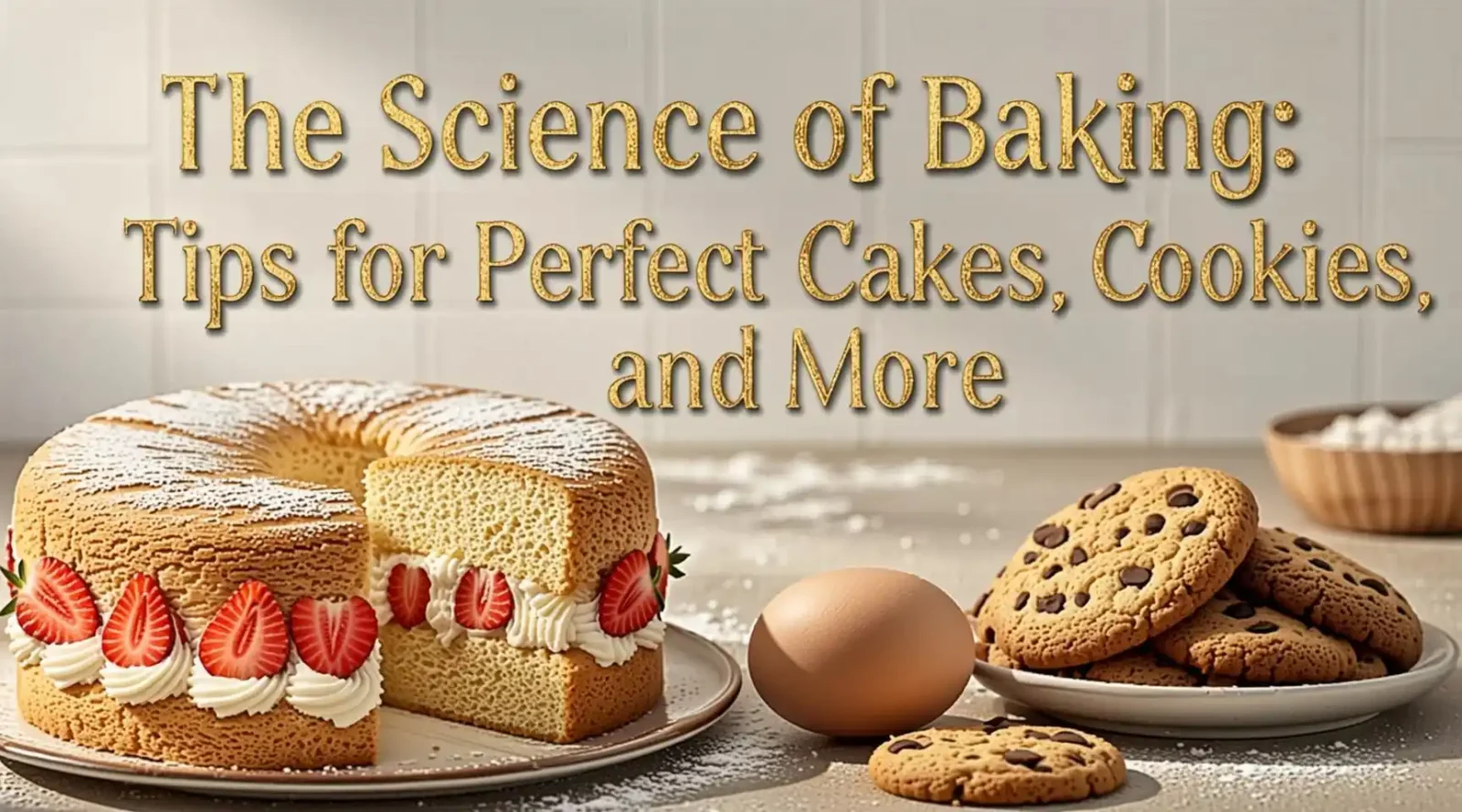
The Science of Baking: Proven Tips for Perfect Cakes, Cookies, and More
Meta Description: Unlock the chemistry behind flawless cakes, chewy cookies, and buttery pastries. Learn science‑backed baking tips, ingredient swaps, and temperature hacks for bakery‑level results at home.
Introduction
Baking is often described as “precise chemistry” — a delicate balance of fats, sugars, proteins, and leaveners that transforms a simple batter into a tender crumb, a crisp edge, or a melt‑in‑your‑mouth cookie. Yet many home bakers feel stuck in trial‑and‑error, wondering why a recipe that worked once can flop the next day.
In this comprehensive guide we’ll dive deep into the science of baking and translate it into practical, actionable tips you can apply to every cake, cookie, and sweet treat you make. Whether you’re a seasoned home baker, a culinary student, or just someone who loves the aroma of fresh‑baked goods, you’ll walk away with a clearer understanding of:
- How temperature influences gluten development and leavening.
- The role of fat versus sugar in texture and mouthfeel.
- When and how to substitute ingredients without compromising quality.
- The hidden secrets behind a perfect crumb, chewy cookie, and golden crust.
Grab a notebook, pre‑heat the oven, and let’s explore the lab‑like magic that happens inside your mixing bowl!
- The Core Principles of Baking Chemistry
Before we jump into specific tips, it’s worth reviewing the four pillars that underpin virtually every baked good:
| Pillar | Primary Function | Typical Ingredients |
| Structure | Provides the framework (crumb, crust, rise). | Flour (gluten), eggs, leaveners (baking powder/soda), starches. |
| Tenderness | Softens the structure for a pleasant mouthfeel. | Fat (butter, oil), sugar, liquid, acids. |
| Moisture | Prevents drying, contributes to texture. | Water, milk, fruit purees, syrups. |
| Flavor & Browning | Adds taste, aroma, and visual appeal. | Sugars, dairy, Maillard reaction contributors (proteins + sugars), caramelized fats. |
Understanding how each of these components interacts is the foundation for applying baking science to everyday recipes.
1.1 Gluten Development – The Protein Network
Flour’s proteins (gliadin and glutenin) combine with water to form gluten, a stretchy matrix that traps gas bubbles produced by leaveners.
- More gluten = Chewy, elastic texture (think bagels, pizza crust).
- Less gluten = Tender, crumbly texture (cakes, pastries).
Tip: For tender cakes, use low‑protein flours (cake flour, pastry flour) and avoid over‑mixing once wet ingredients are added.
1.2 Leavening – The Rise of CO₂
Baking powder (double‑acting) and baking soda (single‑acting) release carbon dioxide when they encounter moisture and heat (or an acid).
- Baking soda needs an acidic partner (buttermilk, lemon juice, cocoa powder).
- Baking powder already contains its own acidic component, so it works in neutral batters.
Tip: Measure leaveners precisely—too much causes rapid rise and collapse; too little results in dense products.
1.3 Fat – The Softening Agent
Fat coats flour particles, limiting gluten formation, and creates a “short” texture. It also contributes to flavor and helps with moisture retention.
- Solid fats (butter, shortening) add structure; they melt during baking, leaving air pockets that expand.
- Liquid oils coat more evenly, giving a softer crumb.
Tip: For a cake with a fine, velvety texture, melt butter and combine with sugar (the “creaming” method) to incorporate tiny air bubbles that aid leavening.
1.4 Sugar – More Than Sweetness
Sugar is hygroscopic (it attracts water), delays gluten development, and caramelizes for browning.
- Granulated sugar provides structure and crispness.
- Brown sugar adds moisture and a slight molasses flavor.
- Powdered sugar dissolves instantly, ideal for delicate cakes and glazes.
Tip: Adjust sugar levels to control browning. A higher sugar content leads to a darker crust more quickly.
- Mastering Cakes: From Fluffy to Moist
2.1 Choosing the Right Flour
- All‑purpose flour (10–12% protein) – works for most cakes but can produce a slightly denser crumb.
- Cake flour (≈8% protein) – yields a light, airy texture; ideal for sponge and chiffon cakes.
Science Insight: The lower protein in cake flour reduces gluten, preventing the formation of tough strands that can make a cake “rubbery.”
2.2 The Creaming Method – Air, Sugar, and Fat
The classic creaming technique (butter + sugar) is a cornerstone of cake science.
- Beat butter until pale and fluffy – creates micro‑air pockets.
- Gradually add sugar – sugar crystals cut the butter, widening air pockets.
- Add eggs one at a time – eggs act as an emulsion stabilizer, keeping air evenly dispersed.
Result: A batter that expands quickly in the oven, producing a lofty crumb.
2.3 Temperature Control
| Stage | Ideal Temperature | Why It Matters |
| Butter | 65–70 °F (18–21 °C) | Soft enough to cream, but not melted (which would eliminate air pockets). |
| Eggs | Same as butter | Prevents the butter from curdling when eggs are added. |
| Oven | Pre‑heat to 325‑350 °F (160‑180 °C) | A moderate temperature allows the cake to rise before the crust forms, avoiding “doming.” |
| Cooling | Room temperature, then refrigerated if frosting | Gradual cooling prevents a sudden collapse of the crumb. |
Tip: If you bake at a higher temperature, the outer edges set too fast, pushing air outward and giving a dome or a cracked top.
2.4 Moisture Secrets – The “Liquid Ratio”
A basic cake formula (by weight) is Flour : Sugar : Fat : Liquid = 1 : 1 : 0.5 : 0.5–0.75.
- Higher liquid ratio → moister crumb but risk of collapsing.
- Adding dairy (milk, buttermilk) or fruit puree adds both moisture and flavor.
Science Insight: Milk’s lactose also contributes to Maillard browning, giving a richer golden crust.
2.5 Common Cake Mistakes & Fixes
| Mistake | Cause | Fix |
| Dry, crumbly cake | Over‑mixing or too much flour | Use the spoon‑and‑fold method after adding dry ingredients; weigh flour for accuracy. |
| Sunken center | Oven opened early, or batter too cold | Avoid opening the oven for the first 20 min; let batter come to room temperature. |
| Flat cake | Insufficient leavening or over‑mixing | Check freshness of baking powder; mix just until combined. |
| Uneven crumb | Uneven butter temperature | Soften butter uniformly; use a kitchen scale for consistent ingredient amounts. |
- Cookie Chemistry: Achieving the Ideal Chew, Crunch, or Crisp
Cookies are a playground for baking science because small changes in ratio and technique can transform a cookie from cake‑like to chewy to ultra‑crunchy.
3.1 The Butter Temperature Debate
| Butter State | Cookie Result |
| Cold (chilled) | Less spreading, thicker, cake‑like interior (good for “pillow” cookies). |
| Room temperature (soft) | Moderate spread, balanced chew (classic chocolate chip). |
| Melted | Maximum spread, thin, crisp edges (great for snappy biscotti). |
Tip: For a chewy, thick cookie, chill the dough for at least 30 minutes before baking.
3.2 Sugar Ratios – Sweetness Meets Texture
- More brown sugar → chewier, because the molasses retains moisture.
- More granulated sugar → crisper, because it encourages caramelization and spreads more.
Pro Tip: A 1:1 ratio of brown to white sugar is a reliable baseline for a classic chewy cookie.
3.3 Baking Powder vs. Baking Soda
- Baking soda (alkaline) promotes spread and browning; best for thin, crisp cookies.
- Baking powder (acidic + alkaline) creates lift, leading to a puffier texture.
Science Note: If your recipe calls for both, you’re aiming for a balanced spread and lift—common in chocolate chip cookies.
3.4 The Role of Eggs
Eggs act as binders and add moisture. Adjust the number of egg yolks/whites to fine‑tune texture:
| Egg Adjustment | Effect |
| Extra yolk | Richer, more tender crumb. |
| Extra white | Drier, more crisp; helps with spread. |
| Whole egg omitted | Dense, shortbread‑like texture. |
3.5 Ideal Baking Temperature
| Cookie Type | Temperature | Result |
| Chewy | 325 °F (163 °C) | Slower set, retains moisture. |
| Crispy | 375 °F (190 °C) | Quick set, moisture evaporates fast. |
| Thick & Puffed | 350 °F (177 °C) | Balanced rise and spread. |
Tip: Use a convection oven for evenly browned edges and a slightly lower rack to prevent over‑browning on the top.
3.6 Common Cookie Problems & Solutions
| Problem | Likely Cause | Remedy |
| Flat, greasy cookies | Over‑softened butter or excess sugar | Chill dough; reduce butter by 10 %. |
| Hard, dry cookies | Too much flour or over‑baking | Sift flour; bake 1–2 min less; add an extra egg yolk. |
| Uneven browning | Oven hot spots | Rotate trays halfway; use a light-colored baking sheet. |
| Cookie cracks on top | Over‑mixing or too much leavening | Mix just until combined; verify baking soda/powder freshness. |
- Beyond Cakes & Cookies – Pastries, Muffins, and Quick Breads
4.1 Pastry Flakiness – Layering Fat & Dough
- Cold butter → creates distinct layers (lamination).
- Minimal handling → keeps butter from melting into the dough.
Science Hack: Freeze your butter cubes for 10 minutes before incorporating them into flour. The resulting steam pockets during baking act like “mini‑leaveners,” producing flaky layers.
4.2 Muffin Moisture – The “Stir‑Only-Once” Rule
Over‑mixing muffin batter creates gluten, leading to dense, tough muffins.
Best Practice:
- Mix dry ingredients in one bowl.
- Mix wet ingredients in another.
- Stir together until just combined; a few lumps are fine.
4.3 Quick Breads – Balancing Acidic & Alkaline
Many quick breads (banana, pumpkin) rely on baking soda paired with an acid (mashed bananas, buttermilk, yogurt).
Tip: For every ½ tsp of baking soda, add at least ½ cup of an acidic ingredient to ensure full leavening.
4.4 Gluten‑Free Baking – Recreating Structure
Without gluten, bakers use:
- Starches (tapioca, potato) for chew.
- Protein powders (egg white, soy) for structure.
- Hydrocolloids (xanthan gum, guar gum) to mimic gluten’s elasticity.
Science Insight: A typical gluten‑free blend uses a 1:1:1 ratio of starch:protein:hydrocolloid. Adjust based on end‑product texture.
- Ingredient Substitutions – When You’re Out of Something
| Desired Ingredient | Substitute | Conversion Ratio | Science Note |
| All‑purpose flour | Cake flour + 2 Tbsp cornstarch per cup | 1:1 | Cornstarch reduces protein, mimicking cake flour. |
| Butter | Half‑softened butter + ¼ cup oil per cup | 1:1 | Oil adds moisture; butter provides flavor. |
| Egg | ¼ cup unsweetened applesauce or ¼ cup mashed banana per egg | 1:1 | Adds moisture, but less binding; add 1 tsp xanthan for structure. |
| Buttermilk | Milk + 1 Tbsp lemon juice/vinegar per cup, let sit 5 min | 1:1 | Acid curdles milk, replicating buttermilk’s tang and leavening boost. |
| Brown sugar | White sugar + 1 Tbsp molasses per cup | 1:1 | Molasses restores moisture and flavor. |
Pro Tip: When substituting, keep an eye on moisture balance. Adjust liquid or flour by 5‑10 % to maintain the right batter consistency.
- Tools of the Trade – Accurate Measurement = Consistent Results
| Tool | Why It Matters |
| Kitchen Scale | Weight is more accurate than volume, especially for flour and sugar. |
| Thermometer (Instant‑Read) | Checks butter temperature, dough temperature, and oven accuracy. |
| Silicone Baking Mats | Provide even heat distribution, reduce hot‑spot burning. |
| Oven Probe | Monitors internal temperature, crucial for large cakes or breads. |
| Mixing Bowls with Lip | Prevents spills and ensures precise ingredient incorporation. |
Science Reminder: A 5‑gram variance in leavening agents can shift a cake’s rise dramatically. Weigh, don’t eyeball!
- The Role of Altitude & Humidity
7.1 High Altitude (≥ 3,000 ft)
- Decrease baking powder/soda by ¼ tsp per tsp.
- Increase liquid by 1‑2 Tbsp.
- Raise oven temperature by 15‑25 °F to set structure faster.
Reason: Lower air pressure reduces the pressure of expanding gases, causing baked goods to rise too quickly and collapse.
7.2 Humid Climates
- Reduce liquid by 1‑2 Tbsp.
- Add a bit more flour (≈2 Tbsp) to counter excess moisture.
Reason: Humidity adds hidden water, making doughs stickier and cakes denser.
- Putting It All Together – A Sample Recipe Walkthrough
8.1 Classic Chocolate Chip Cookies (Chewy Version)
| Ingredient (by weight) | Amount |
| Unsalted butter, softened | 113 g (½ cup) |
| Granulated sugar | 75 g (½ cup) |
| Light brown sugar | 75 g (½ cup) |
| Large egg, room temp | 50 g (1 egg) |
| Vanilla extract | 5 g (1 tsp) |
| All‑purpose flour | 210 g (1 ¾ cup) |
| Baking soda | 2 g (½ tsp) |
| Salt | 2 g (½ tsp) |
| Dark chocolate chips | 180 g (1 cup) |
| Optional: 10 g (1 tsp) oat flour for extra chew |
Method (Science‑Backed Steps)
- Cream butter & sugars for 2‑3 min until pale. This creates micro‑air cells for lift.
- Add egg & vanilla; beat 30 s. Egg acts as an emulsifier, stabilizing air.
- Whisk dry ingredients (flour, soda, salt) together. This distributes leavening evenly.
- Gradually fold dry mix into wet using a spatula (avoid over‑mixing).
- Stir in chocolate chips just until incorporated.
- Chill dough 30 min (cold butter + solidifies fat → less spread).
- Pre‑heat oven to 325 °F (163 °C).
- Scoop 2‑tbsp portions onto parchment‑lined sheet, spaced 2 in apart.
- Bake 12‑14 min until edges are lightly golden yet centers look soft.
- Cool 5 min on sheet, then transfer to rack.
Result: Chewy centers, slightly crisp edges—a perfect illustration of sugar balance, butter temperature, and moderate heat.
- FAQs – Quick Answers to Common Baking Queries
Q1. How do I know if my baking powder is still active?
A: Mix ½ tsp powder with ¼ cup hot water. If it bubbles vigorously within 10 seconds, it’s good.
Q2. My cupcakes are domed—how can I prevent this?
A: Lower oven temperature by 15‑20 °F and reduce baking time. Also, line pans with parchment circles to keep batter from spreading down the sides.
Q3. Why do my brownies turn out cakey?
A: Over‑mixing develops gluten, and excess flour or leavening contributes to rise. Use a minimal‑mix method and measure flour by weight.
Q4. Can I substitute honey for sugar?
A: Yes, but reduce other liquids by ¼ cup for each cup of honey and lower oven temperature by 25 °F because honey browns faster.
Q5. Do I really need to sift flour?
A: Sifting aerates flour and removes lumps, leading to a lighter texture—especially important for cakes and meringues.
- Final Thoughts – Embrace the Science, Enjoy the Art
Baking is a beautiful marriage of science—the precise reactions of ingredients—and art—your intuition, creativity, and love for flavors. By mastering the underlying chemistry, you gain a reliable toolbox that lets you troubleshoot, experiment, and consistently produce bakery‑worthy treats.
Remember these core takeaways:
- Measure by weight for accuracy.
- Control temperature—of ingredients, dough, and oven.
- Mind the ratios of fat, sugar, and liquid to dictate texture.
- Respect the gluten‑protein balance for the right crumb.
- Adapt for altitude, humidity, and dietary needs with smart adjustments.
Now go forth, preheat that oven, and let the science of baking guide you to perfect cakes, flawless cookies, and beyond. Happy baking!
Keywords
- Baking science
- Cake texture
- Cookie chewiness
- Baking temperature
- Ingredient substitution
- Baking tips
Hashtags
#BakingScience #PerfectCake #CookieLovers #BakingTips #KitchenScience #HomeBaking
Disclaimer
The information provided in this article is for educational and informational purposes only. While every effort has been made to ensure the accuracy of the content, individual results may vary based on equipment, ingredient quality, and personal technique. The author and publisher are not liable for any injury, loss, or damage resulting from the use of the recipes or tips presented. Always follow safe kitchen practices and consult a qualified professional for dietary or health concerns.











Leave a comment