


















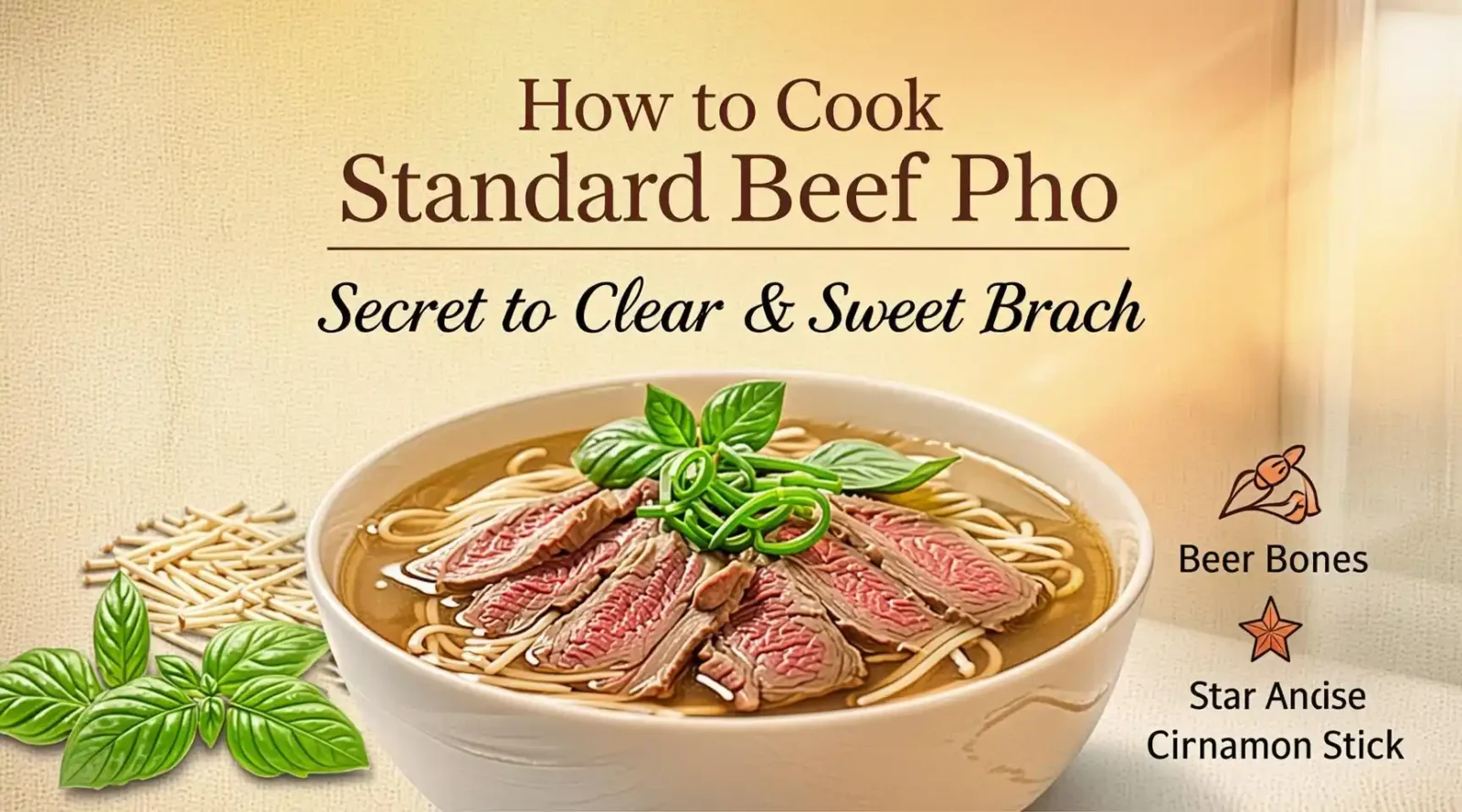
How to Cook Standard Beef Pho – The Secret to a Clear, Sweet, and Aromatic Broth
Meta Description
Discover the step‑by‑step method for making authentic Vietnamese beef pho at home. Learn the science behind a crystal‑clear, subtly sweet broth, essential ingredients, and pro tips that guarantee restaurant‑quality results every time.
Introduction
Vietnamese beef pho (phở bò) is more than a noodle soup; it’s a cultural icon, a comforting ritual, and, for many, the ultimate weekend breakfast. While the fragrant herbs, tender sliced beef, and silky rice‑noodles are instantly recognizable, the heart of the dish lies in its broth. A perfectly clear, sweet, and deeply umami‑laden broth separates a home‑cooked bowl from a restaurant masterpiece.
In this comprehensive guide we’ll break down every element that contributes to that celebrated broth—from selecting the right bones to mastering the “scum‑skimming” technique, from spice‑toasting to the final touch of sugar. By the end of the article, you’ll have a repeat‑able, standard‑beef pho recipe that ranks high on flavor, clarity, and authenticity—perfect for SEO‑friendly blog posts, cooking classes, or your personal culinary archive.
Quick takeaway: Clarity comes from proper bone preparation and gentle simmering; sweetness is achieved with a modest amount of rock sugar or palm sugar; depth is built through aromatics and spice‑toasting.
Table of Contents
- Essential Ingredients & Tools
- Step‑by‑Step: Building the Broth
- 2.1 Preparing the Bones (Par‑boiling & Roasting)
- 2.2 Char‑toasting the Aromatics
- 2.3 Simmering the Stock (Timing & Temperature)
- 2.4 Clarifying & Sweetening the Broth
- Assembling the Bowl: Noodles, Beef, and Garnishes
- Pro Tips & Common Mistakes to Avoid
- FAQ – Frequently Asked Questions
- Nutrition Snapshot
- Social Sharing: Hashtags & Keywords
- Essential Ingredients & Tools
| Category | Item | Why It Matters |
| Bones | 2 kg beef marrow bones (knuckle, shank, or oxtail) | High collagen content yields a silky mouthfeel and natural gelatin for a glossy broth. |
| Meat | 300 g thinly sliced raw eye‑fillet or sirloin (freeze slightly for easy slicing) | Quick‑cooking, tender protein that finishes in the hot broth. |
| Aromatics | 1 large onion, 1 large ginger, 4‑5 star anise, 2 cinnamon sticks, 4 cloves, 1 tbsp coriander seeds, 1 tbsp fennel seeds, 1 tbsp cardamom pods | Provide the trademark spicy‑sweet profile; toasting releases essential oils. |
| Seasonings | 2 tbsp fish sauce, 1 tbsp soy sauce (optional), 1 tsp rock sugar (or palm sugar), 1 tbsp light soy sauce, 1 tsp salt | Balance salty‑sweet‑umami; fish sauce adds depth without overpowering. |
| Noodles | 400 g dried flat rice noodles (bánh phở) | Must be soaked briefly for a tender but firm bite. |
| Herbs & Condiments | Fresh Thai basil, cilantro, sliced green onions, lime wedges, sliced jalapeño or Thai bird chilies, bean sprouts, hoisin sauce, sriracha | Customizable toppings that bring brightness and heat. |
| Tools | Large stockpot (≥6 L), fine‑mesh strainer or chinois, slotted spoon, kitchen shears, heavy‑bottomed skillet or dry pan, thermometer (optional) | Proper equipment ensures even heat distribution and easy skimming. |
SEO tip: Sprinkle the primary keyword “standard beef pho broth” throughout headings, alt‑text for images (e.g., “clear beef pho broth simmering”), and meta tags.
- Step‑by‑Step: Building the Broth
2.1 Preparing the Bones – Par‑boiling & Roasting
- Rinse the bones under cold water to remove surface blood.
- Place them in a large pot, cover with cold water, bring to a rolling boil (≈100 °C).
- Boil for 5–7 minutes while skimming the foam aggressively. This “par‑boil” extracts impurities that cause cloudiness.
- Drain the bones, discard the water, and rinse the bones again.
- Optional but recommended: Transfer the bones to a preheated oven (200 °C/400 °F) and roast for 20–30 minutes until lightly caramelized. Roasting deepens the broth’s color and adds a subtle roasted note without sacrificing clarity.
Pro tip: If you’re short on time, skip the oven step—just keep the par‑boil and a thorough skimming routine.
2.2 Char‑toasting the Aromatics
- Halve the onion and ginger. Place cut sides down on a dry skillet over medium‑high heat.
- Char until the surfaces are dark brown, about 6–8 minutes total. The char not only adds a smoky nuance but also helps remove raw odors.
- Transfer to a bowl, cover with a clean kitchen towel for 5 minutes (steam will loosen the skins). Peel away the charred skins—this prevents bitterness.
2.3 Simmering the Stock (Timing & Temperature)
| Step | Action | Time & Temp |
| A. | Return the roasted/par‑boiled bones to a clean stockpot. Add 4 L cold water (just enough to cover). | |
| B. | Add the charred onion, ginger, and spice bundle (star anise, cinnamon, cloves, coriander, fennel, cardamom) wrapped in cheesecloth. | |
| C. | Bring to a gentle simmer (≈85–90 °C). Avoid a hard boil; vigorous bubbles break collagen and cloud the broth. | 5 min |
| D. | Reduce heat to maintain a barely‑visible surface ripple. Skim any foam every 10 minutes with a slotted spoon. | 2 h |
| E. | After 2 hours, add a handful of thinly sliced scallions (optional) and continue simmering for another 30 minutes. | 2 h 30 min total |
| F. | Strain the broth through a fine‑mesh strainer or cheesecloth into a clean pot. Discard solids. |
Why 2 hours? This window extracts maximum gelatin and flavor while preserving clarity. Extending beyond 4 hours typically yields a thicker, cloudier stock, which is undesirable for classic pho.
2.4 Clarifying & Sweetening the Broth
- Season the strained broth with 2 tbsp fish sauce, 1 tsp rock sugar (adjust to taste), and ½ tsp salt. Dissolve sugar completely.
- Taste – the broth should taste balanced: salty, slightly sweet, with a faint aromatic spice.
- If any cloudiness remains, dip a paper towel into the hot broth, wring it lightly, and skim the surface a final time.
Safety note: Do not add sugar or fish sauce before the final strain; doing so can trap particles and affect clarity.
- Assembling the Bowl: Noodles, Beef, and Garnishes
- Soak the rice noodles in hot water (≈80 °C) for 5–6 minutes until pliable but firm. Drain and set aside.
- Blanch the sliced raw beef in the simmering broth for 10–15 seconds until just pink (the residual heat will finish cooking).
- Divide the noodles among serving bowls, arrange the sliced beef on top, and ladle the hot broth (≈95 °C) over everything.
- Garnish generously with fresh Thai basil, cilantro, sliced green onions, bean sprouts, lime wedges, and chili slices. Offer hoisin and sriracha on the side for personalized heat and sweetness.
Visual cue: The broth should glisten like a clear amber, the noodles should sit slightly apart, and the beef should retain its bright pink hue—signs of a well‑executed pho.
- Pro Tips & Common Mistakes to Avoid
| Tip | Explanation |
| Cold water start | Begin with cold water; it allows collagen to dissolve gradually, creating a silky texture. |
| Gentle simmer | A rolling boil emulsifies fats and proteins, resulting in a cloudy broth. |
| Skim aggressively | The first 30 minutes produce the most scum; removal early is crucial. |
| Use rock sugar | It dissolves slowly and imparts a clean sweetness without overt caramel notes. |
| Don’t overload the pot | Too many bones crowd the water, limiting heat flow and reducing clarity. |
| Slice beef chilled | Partially frozen meat yields ultra‑thin, uniform slices that cook instantly. |
| Season at the end | Adjust fish sauce and salt after straining; otherwise, you risk over‑salting. |
| Serve immediately | Pho is best enjoyed within 30 minutes of broth preparation; prolonged standing can cause the broth to separate. |
- FAQ – Frequently Asked Questions
Q1. Can I use a pressure cooker for the broth?
Yes. Use the same bone-to-water ratio, pressure‑cook for 45 minutes, then release naturally. Skim the surface after opening, then proceed to strain and season. The result will be slightly richer but still clear if you keep the pressure low.
Q2. What’s the difference between rock sugar and regular granulated sugar?
Rock sugar dissolves slowly and adds a subtle, clean sweetness without the syrupy aftertaste that can mask the delicate spice balance.
Q3. I only have beef shank bones; will the broth be gelatinous enough?
Shank bones are excellent for collagen. Pair them with a small amount of marrow or knuckle bones for the richest mouthfeel.
Q4. How can I store leftover broth?
Cool quickly (ice bath), then refrigerate for up to 3 days or freeze in sealed containers for up to 2 months. Re‑heat gently; avoid a hard boil to preserve clarity.
Q5. Why does my broth turn cloudy after adding fish sauce?
Fish sauce can contain sediment. Use a high‑quality, low‑sodium brand and add it after straining; skim the surface once more if needed.
- Nutrition Snapshot (per serving, approx. 1 bowl)
| Nutrient | Amount |
| Calories | 350 kcal |
| Protein | 22 g |
| Fat | 10 g (mostly from bone marrow) |
| Carbohydrates | 45 g (rice noodles) |
| Sodium | 1,200 mg (adjustable with fish sauce) |
| Vitamin C | 15 % DV (from lime and herbs) |
| Iron | 10 % DV (from beef) |
Note: Values vary based on portion size, noodle type, and amount of condiments used.
- Social Sharing: Hashtags, Keywords, and Disclaimer
Primary Keywords (for SEO)
- Standard beef pho broth
- Clear pho broth recipe
- Sweet Vietnamese beef pho
- How to make pho broth
- Authentic beef pho at home
- Beef pho cooking tips
Use these keywords naturally in headings, alt‑text, and throughout the article to improve search engine visibility.
Suggested Hashtags (for social media promotion)
- #BeefPho
- #PhoBroth
- #VietnameseCuisine
- #ClearBroth
- #HomeCooking
- #FoodieTips
Disclaimer
The information provided in this article is for general educational purposes only. While we strive for accuracy, cooking times, ingredient availability, and nutritional values may vary based on individual equipment, personal dietary needs, and regional variations. Readers should adapt the recipe to their own preferences and consult a qualified professional for any food allergies, health concerns, or specific nutritional advice.
Closing Thought
Mastering the clear, sweet broth is the cornerstone of an unforgettable beef pho experience. By respecting the fundamentals—proper bone preparation, gentle simmering, and thoughtful seasoning—you’ll consistently deliver a bowl that rivals the best street‑side stalls of Hanoi and Saigon.
Ready to taste the difference? Gather your bones, fire up the stove, and let the aromatic steam guide you.
Enjoy your pho!
For further reading, check out our related guides:
- “The Art of Rice‑Noodle Preparation for Pho”
- “Thai Basil vs. Vietnamese Cilantro: Flavor Pairings in Pho”
- “Home‑Made Hoisin and Sriracha: Two Condiments that Elevate Pho”
Happy cooking!











Leave a comment