


















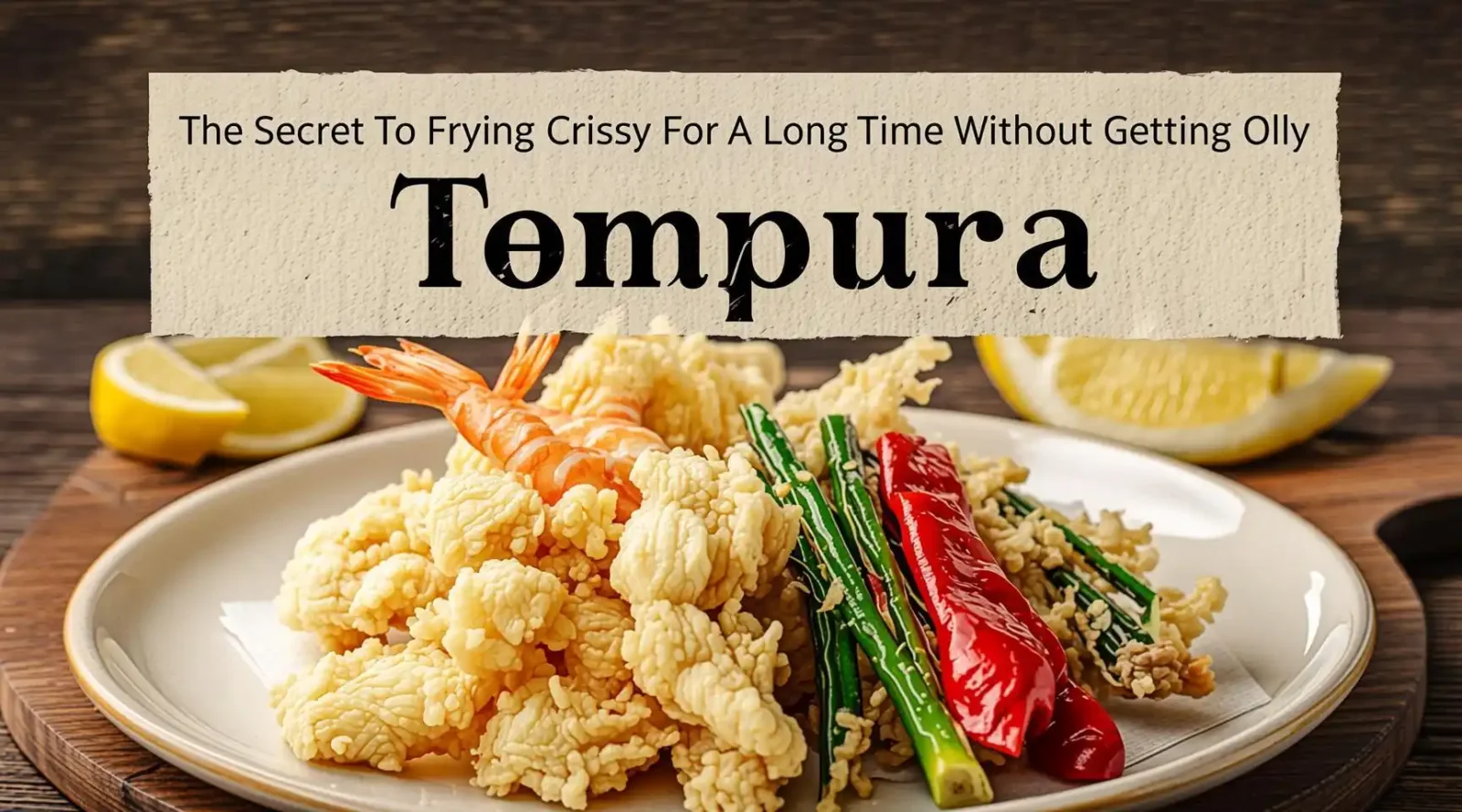
Tempura – The Secret To Frying Crispy For A Long Time Without Getting Oily
Tempura is more than a Japanese delicacy; it’s a benchmark for any home‑cook or professional chef who wants to master the art of deep‑frying. Achieving that light, airy crunch without the greasy after‑taste is often the biggest hurdle. In this guide we break down the chemistry, the technique, and the exact tempura batter recipe that will keep your fries, vegetables, and seafood crisp for hours—not minutes.
Meta Description
Discover the science‑backed secret to perfectly crispy tempura that stays non‑oily for hours. Learn proven batter recipes, oil‑temperature tricks, and pro‑level frying tips.
Table of Contents
- Why Tempura Stays Crispy Longer Than Other Fried Foods
- The Science Behind Oil Absorption
- Choosing the Right Ingredients – The 6 Essentials
- Step‑by‑Step Tempura Batter Recipe (6‑Ingredient Version)
- How to Keep Tempura Crispy: 7 Proven Frying Tips
- Maintaining Oil Temperature for Tempura – Exact Numbers
- Troubleshooting Common Issues
- Storing & Re‑crisping Leftover Tempura
- FAQs – Quick Answers for Busy Cooks
- Final Thoughts – Elevate Your Frying Game
- Why Tempura Stays Crispy Longer Than Other Fried Foods
Most deep‑fried dishes become soggy within 10‑15 minutes because water migrates from the food into the crust, and the oil in the crust then seeps back out. Tempura sidesteps this problem through three key factors:
| Factor | What It Does | Why It Matters |
| Ultra‑light batter | Uses minimal gluten, producing a fragile lattice that locks steam inside | Traps moisture, preventing it from soaking the crust |
| Cold liquid | Ice‑cold water (or sparkling water) keeps batter temperature low | Slows gluten development, yielding a delicate structure |
| High‑heat, low‑oil‑absorption oil | Proper oil temperature (≈ 170 °C / 340 °F) creates an instant seal | Oil can’t penetrate the sheet, so the final product stays dry |
Understanding these principles is the first step toward how to keep tempura crispy for a long time.
- The Science Behind Oil Absorption
When batter contacts hot oil, two simultaneous reactions occur:
- Starch gelatinization – The starch granules swell and create a porous network.
- Protein coagulation – Egg proteins set quickly, forming a skin that acts as a barrier.
If the oil is too cool, gelatinization is incomplete and the crust remains porous, allowing oil in. If the oil is too hot, the crust forms instantly but the interior stays under‑cooked, leading to a soggy finish. The sweet spot—170 °C (340 °F)—balances both reactions, minimizing oil absorption and keeping the bite airy.
- Choosing the Right Ingredients – The 6 Essentials
Below are the best tempura flour and complementary items that make a difference:
| # | Ingredient | Purpose | Pro tip |
| 1 | Low‑protein wheat flour (e.g., cake flour) | Produces less gluten → lighter batter | Sift twice for extra fluff |
| 2 | Cornstarch | Adds crispness and reduces oil uptake | Use a 1:1 ratio with flour |
| 3 | Ice‑cold sparkling water | Introduces tiny air bubbles, keeping batter airy | Keep the water in the freezer for a few minutes before mixing |
| 4 | Egg yolk (optional) | Emulsifies batter, improves color | Use only the yolk for a richer texture |
| 5 | Seasoned rice flour (for gluten‑free) | Alternate base for those avoiding wheat | Gives extra crunch |
| 6 | A pinch of baking soda | Slight leavening for extra lift | Do not over‑mix; a light hand is key |
These ingredients target the six key variables that influence oil absorption in tempura.
- Step‑by‑Step Tempura Batter Recipe (6‑Ingredient Version)
Yield: Approximately 2 cups of batter – enough for 20–25 pieces of tempura.
Prep Time: 5 minutes (excluding chilling).
Ingredients
| Quantity | Ingredient |
| 1 cup | Low‑protein wheat flour (or ½ cup flour + ½ cup rice flour) |
| ¼ cup | Cornstarch |
| ½ tsp | Baking soda |
| 1 large | Egg yolk (optional) |
| ¾ cup | Ice‑cold sparkling water (add more if needed) |
| Pinch | Salt (optional, for seasoning) |
Directions
- Pre‑chill the bowl – Place a mixing bowl in the freezer for 2 minutes; a cold bowl slows gluten formation.
- Combine dry ingredients – Sift flour, cornstarch, baking soda, and salt into the chilled bowl.
- Add the egg yolk – Lightly beat the yolk and drizzle it over the dry mix.
- Introduce water – Slowly pour the sparkling water while folding gently with chopsticks or a whisk. Do not over‑mix; a few lumps are perfect.
- Rest – Let the batter sit for 5 minutes; the starch will hydrate, creating a consistent texture.
- Heat oil – Using a deep, heavy‑bottomed pot, heat neutral oil (e.g., canola or grapeseed) to 170 °C (340 °F). Use a thermometer for accuracy.
- Dip & fry – Coat your prepared vegetables, seafood, or even tofu in the batter (no excess) and gently lower into the oil. Fry in small batches to keep temperature stable.
- Drain – Lift with a slotted spoon, place on a wire rack over a sheet of paper towels, and sprinkle lightly with sea salt.
Result: Light, airy, golden‑brown tempura that stays crisp for up to 90 minutes when served on a dry rack.
- How to Keep Tempura Crispy: 7 Proven Frying Tips
| # | Tip | Why It Works |
| 1 | Maintain a constant oil temperature (170 °C ± 5 °C) | Prevents the crust from absorbing excess oil. |
| 2 | Fry in small batches | Each batch cools the oil less, preserving heat. |
| 3 | Use a wire rack, not paper towels for draining | Paper towels draw moisture back into the crust, making it soggy. |
| 4 | Serve immediately on a warm plate | Cold surfaces cause steam condensation, softening the crust. |
| 5 | Add a pinch of rice flour to the batter | Rice flour forms a tighter network, reducing oil seepage. |
| 6 | Avoid over‑crowding the pot | Over‑crowding drops oil temperature and leads to greasy tempura. |
| 7 | Re‑crisp leftovers with a hot oven (200 °C / 400 °F) for 5‑7 min | Restores the initial crunch without re‑frying. |
These tempura frying tips are the cornerstone of how to keep tempura crispy even after plating.
- Maintaining Oil Temperature for Tempura – Exact Numbers
| Temperature | What Happens | Ideal Use |
| 150 °C – 155 °C (302 °F – 311 °F) | Batter spreads, greasiness increases. | Not recommended for tempura. |
| 160 °C – 165 °C (320 °F – 329 °F) | Light golden color, slower seal. | Acceptable for delicate items (e.g., thinly sliced lotus root). |
| 170 °C – 175 °C (340 °F – 347 °F) | Optimal crispness & minimal oil absorption. | Standard for most tempura. |
| 180 °C – 185 °C (356 °F – 365 °F) | Rapid browning, risk of burnt batter. | Use only for very quick‑fry items (e.g., shrimp tails). |
Pro tip: If the temperature drops below 160 °C after adding food, remove a few pieces and let the oil recover before returning the rest.
- Troubleshooting Common Issues
| Problem | Likely Cause | Quick Fix |
| Batter runs off the food | Too thin batter or too much water | Add a tablespoon more flour; keep water very cold. |
| Tempura is soggy within 10 min | Oil not hot enough or over‑crowding | Raise oil temperature, fry fewer pieces. |
| Batter sticks to the pot | Flour not sifted; residue in pot | Use a clean, non‑reactive pot; sift flour. |
| Batter darkens quickly | Oil temperature too high | Reduce heat by 5 °C; let oil stabilize. |
| Tempura tastes oily | Using oil with low smoke point (e.g., olive oil) | Switch to neutral, high‑smoke‑point oil (canola, grapeseed). |
- Storing & Re‑crisping Leftover Tempura
- Cool completely on a wire rack (no covering).
- Store in an airtight container lined with paper towels (to absorb surface moisture).
- Re‑crisp in a pre‑heated oven at 200 °C (400 °F) for 5‑7 minutes, or in an air‑fryer at 180 °C (350 °F) for 3‑4 minutes.
Avoid microwaving—microwaves steam the crust, undoing the crispness you fought so hard to achieve.
- Frequently Asked Questions
Q: Can I use whole‑wheat flour instead of low‑protein flour?
A: Whole‑wheat contains more gluten and will produce a denser, oil‑absorbing crust. If you must, blend it 70 % whole‑wheat + 30 % low‑protein flour and increase the ice water slightly.
Q: Is it okay to reuse the same oil for multiple batches?
A: Yes, as long as you filter out food particles after each batch and monitor the oil’s smoke point. Once the oil starts smelling burnt or darkens significantly, discard it.
Q: Does the type of oil affect crispness?
A: Neutral oils with a high smoke point (canola, grapeseed, peanut) are ideal. Olive oil’s flavor and lower smoke point make it unsuitable for tempura.
Q: How important is sparkling water?
A: The carbonation introduces micro‑bubbles that keep batter light and prevent a gummy texture. Still water works, but the final crust will be slightly heavier.
Q: Can I freeze uncooked tempura?
A: Yes—dip the foods in batter, freeze on a tray, then transfer to a zip‑lock bag. Fry directly from frozen; just add an extra 30 seconds to cooking time.
- Final Thoughts – Elevate Your Frying Game
Tempura is a testament to precision—the right flour, the right water temperature, the right oil heat. By mastering the tempura batter recipe, respecting the oil temperature for tempura, and applying the seven proven frying tips, you’ll consistently deliver a product that stays delightfully crunchy for hours, never greasy, and always restaurant‑quality.
Whether you’re feeding a family dinner, catering an event, or adding a signature dish to your restaurant menu, the secrets shared here will set you apart. Keep experimenting with seasonal vegetables, seafood, or even inventive sweet tempura (think banana slices with a dusting of powdered sugar). The possibilities are endless—just remember: cold batter, hot oil, and a light hand are the three pillars that guarantee success.
Ready to fry like a pro? Grab your ingredients, fire up that oil, and let the crisp, airy magic of tempura transform your kitchen today.
Keywords (for SEO)
- tempura batter recipe
- how to keep tempura crispy
- oil temperature for tempura
- tempura frying tips
- oil absorption in tempura
- best tempura flour
Hashtags (for social sharing)
#TempuraTips #CrispyFrying #JapaneseCuisine #CookingHacks #FryMastery #OilControl
Disclaimer: The techniques and nutritional information provided in this article are for educational purposes only. Individual results may vary based on equipment, ingredients, and personal skill level. Always follow proper food‑safety guidelines, and consult a qualified professional if you have any health concerns or dietary restrictions.













Leave a comment