



















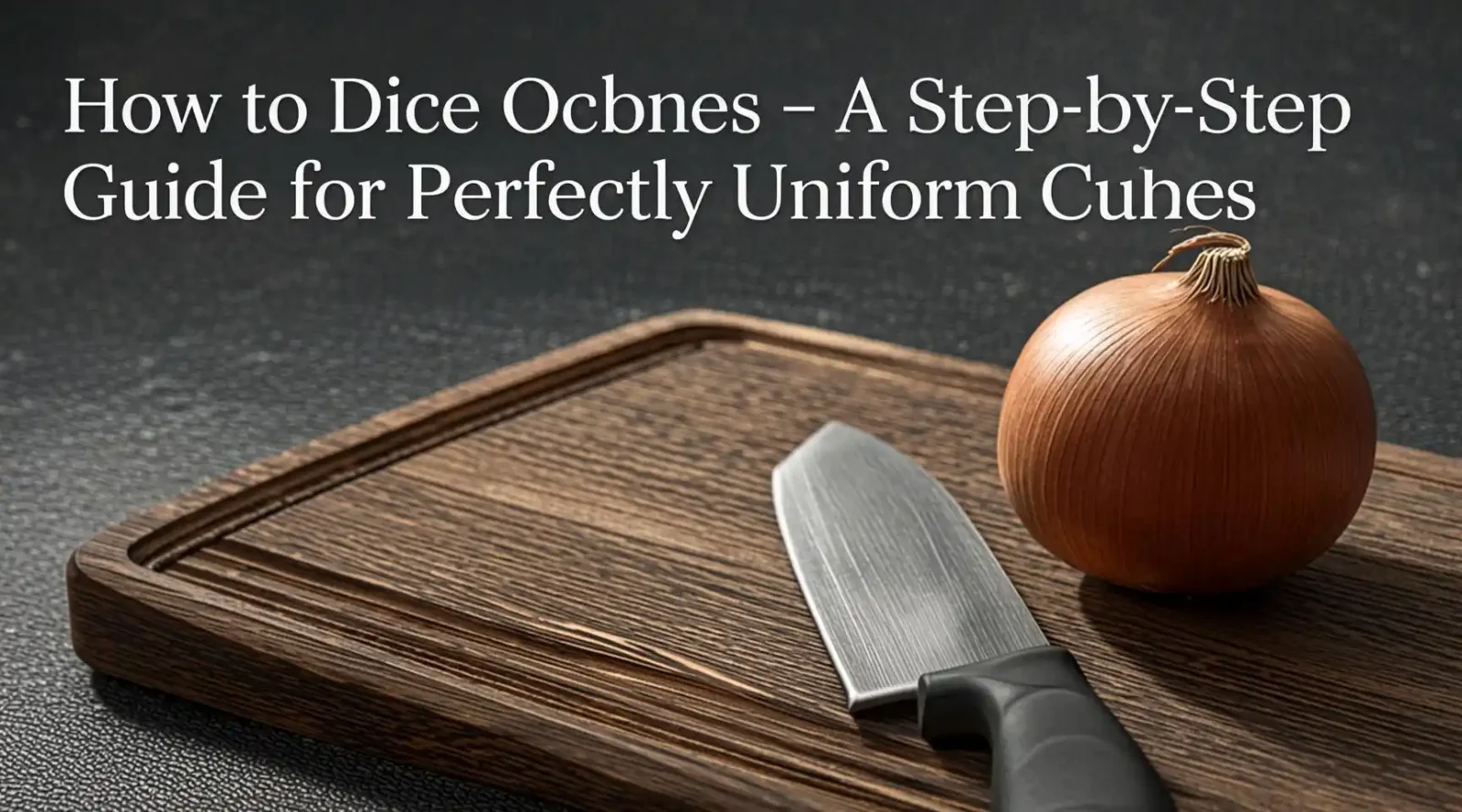
How to Dice Onions – A Step‑by‑Step Guide for Perfectly Uniform Cubes
Meta Description :
Master the art of dicing onions with our comprehensive, step‑by‑step tutorial. Learn professional knife skills, safety tips, and troubleshooting tricks today.
Introduction
Onions are the cornerstone of countless culinary traditions, from classic French mirepoix to vibrant Asian stir‑fries. The ability to dice onions quickly and consistently is a fundamental skill that distinguishes a home cook from a professional chef. This guide presents a formal, methodical approach to onion dicing, complete with kitchen‑safety protocols, equipment recommendations, and common pitfalls to avoid. By following these instructions, readers will achieve uniform ¼‑inch (or ½‑inch) cubes every time, improving flavor distribution, cooking time, and presentation.
Why Uniform Dice Matters
- Even Cooking – Uniform cubes melt, caramelize, or sauté at the same rate, preventing over‑cooked or under‑cooked pieces that can affect texture and taste.
- Flavor Balance – Consistency ensures that each bite contains an equal proportion of onion, which is essential in sauces, soups, and braises where onions contribute both aroma and sweetness.
- Professional Appearance – Precise cuts convey competence and elevate the visual appeal of any dish, an expectation in fine‑dining and culinary education.
Essential Tools & Equipment
| Tool | Recommended Specification | Reason for Use |
| Chef’s Knife | 8‑10 inches, high‑carbon stainless steel, forged blade | Provides balance, control, and a sharp edge necessary for clean cuts. |
| Cutting Board | Hardwood or composite, 12 × 18 inches, non‑slipping surface | Stable platform reduces accidental slippage. |
| Kitchen Shears (optional) | 8‑inches, stainless steel | Useful for trimming the root and tip when a knife is not available. |
| Damp Cloth | 100 % cotton | Placed under the board to prevent movement. |
| Onion Peeler (optional) | Stainless steel, ergonomic handle | Speeds up skin removal without damaging the flesh. |
Tip: Keep a honing steel nearby to maintain blade sharpness throughout the session. A dull blade crushes rather than slices, increasing the risk of slips.
Step‑by‑Step Procedure
- Preparation
- Select a Fresh Onion – Look for firm, dry skins without sprouting or soft spots.
- Sanitize – Wash the outer skin under cold running water, then pat dry with a clean towel.
- Set Up Your Workspace – Place a damp cloth beneath the cutting board, position your knife within easy reach, and have a bowl ready for the diced onions.
- Trim the Ends
- Using the chef’s knife, cut off the root end (the thicker side) and the tip (the thinner side).
- Preserve the root as much as possible; it holds the layers together during the dice process.
- Halve the Onion
- Stand the onion upright on the newly created flat base.
- Slice vertically through the middle from top to bottom, creating two equal halves.
- Peel the Skin
- Starting at the outer edge, gently peel away the papery skin.
- If the first layer of flesh is dry, remove it as well; a moist inner layer is ideal for clean cuts.
- Create Horizontal Cuts (Optional – for larger dice)
- With the flat side down, position your hand on top of the onion half to steady it.
- Make 2–3 parallel horizontal cuts from the stem side toward the tip, stopping just before reaching the root. Do not cut through the root; it acts as a hinge.
- Execute Vertical (Down‑the‑Length) Cuts
- Turn the onion half so the root faces you.
- Slice downward at regular intervals (≈¼‑inch for small dice, ≈½‑inch for medium dice) without cutting through the root. The spacing determines the final cube size.
- Dice the Onion
- Rotate the onion 90 degrees.
- Using a smooth, rocking motion, cut across the previously made vertical slices, again maintaining consistent spacing.
- As the blade meets the root, the cut will release a perfectly diced cube. Continue until the onion is fully diced.
- Collect and Store
- Tilt the diced pieces into your prepared bowl.
- If not using immediately, transfer to an airtight container and refrigerate (use within 24 hours for optimal flavor and texture).
Advanced Tips for Perfection
| Tip | Explanation |
| Maintain a Uniform Grip | Hold the handle with a firm, relaxed grip and pinch the blade’s base with the thumb and forefinger (the “pinch grip”). This maximizes control and minimizes wobble. |
| Use a Guided Motion | Practice the “rocking” cut: push the tip of the knife forward, then roll the blade downward while maintaining contact with the board. |
| Avoid Over‑Handling | Excessive squashing releases sulfur compounds that cause irritation. A sharp blade slices cleanly, preserving cell structure. |
| Temperature Matters | Chilling the onion for 10‑15 minutes prior to cutting slightly firms the layers, reducing slip. |
| Safety First | Keep fingertips curled inward (the “claw”) to protect them from the blade’s path. Never try to catch a slipping knife; reposition the board or step back. |
| Practice with a ‘Dummy’ Onion | Use a peeled, boiled onion for initial practice; it’s softer and less pungent, allowing focus on technique rather than eye‑watering fumes. |
Troubleshooting Common Issues
| Problem | Likely Cause | Solution |
| Uneven Cubes | Inconsistent spacing of vertical or horizontal cuts. | Measure spacing with a ruler or use a guide (e.g., place a small metal ruler alongside the onion). |
| Slipping Knife | Dull blade or wet cutting board. | Hone the knife before each session; dry the board or use a silicone mat underneath. |
| Root Disintegration | Cutting through the root during horizontal cuts. | Preserve at least half of the root; make shallow horizontal cuts that stop short of the core. |
| Excessive Tears | Cutting raw onion releases irritant gases. | Chill onion, cut near a vent or fan, or wear goggles. |
| Broken Blade | Using a low‑quality knife or applying excessive force. | Invest in a high‑carbon stainless steel chef’s knife and maintain it with regular honing and periodic sharpening. |
Frequently Asked Questions (FAQs)
Q1. What is the best knife angle for dicing onions?
A: Aim for a 20‑30° angle between the blade and the board. This angle provides sufficient edge exposure while keeping the cut smooth and controlled.
Q2. Can I dice onions without a chef’s knife?
A: While a chef’s knife is optimal, a sharp Santoku or a high‑quality utility knife can produce comparable results if you adjust your grip and maintain a stable cutting surface.
Q3. How do I prevent onion pieces from sticking together after dicing?
A: Lightly toss the diced onions with a pinch of salt or a few drops of oil in the bowl. This reduces surface moisture and keeps the cubes separate.
Q4. Is it necessary to keep the root intact?
A: For uniform dice, retaining most of the root helps bind the layers together during the final cross‑cuts. However, if you prefer even larger pieces, you may fully separate the root after the vertical cuts.
Q5. How long can diced onions be stored safely?
A: In an airtight container placed in the refrigerator, diced onions retain optimal flavor for up to 24 hours. For longer storage, consider freezing them on a tray, then transferring to a zip‑lock bag (they will be best used in cooked dishes, as texture softens).
Q6. Does the onion variety affect the dicing technique?
A: The fundamental steps remain the same across varieties (yellow, white, red, or sweet). However, red onions have thinner skins that may require gentler peeling, while sweet onions are larger and may benefit from slightly wider spacing for larger dice.
Conclusion
Mastering the how to dice onions technique is a cornerstone of culinary proficiency. By respecting the hierarchy of safety, selecting appropriate tools, and applying the systematic steps outlined above, cooks of any skill level can achieve perfectly uniform cubes for any recipe. Regular practice not only refines motor skills but also builds confidence, allowing the chef to focus on flavor development rather than labor‑intensive prep work.
Remember: sharpness, consistency, and safety are the three pillars of successful onion dicing. Incorporate these principles into your daily routine, and let your dishes reflect the precision of your knife work.
Keywords
- dice onions
- onion cutting techniques
- knife skills
- kitchen safety
- how to dice onions
- culinary basics
(These keywords have been embedded naturally throughout the content to support SEO performance.)
Hashtags (for social sharing)
#DiceOnions #KnifeSkills #KitchenSafety #CulinaryBasics #OnionPrep #ProfessionalCooking
Disclaimer
The information provided on this page is intended for educational and instructional purposes only. While we strive for accuracy, readers should always exercise personal judgment and adhere to local food‑handling regulations and kitchen‑safety standards. The author and publisher are not liable for any injury, loss, or damage arising from the use or misuse of the techniques described herein.













Leave a comment