















How to Install GhostBSD 26.1: A Step‑by‑Step Beginner’s Guide
GhostBSD is the sleek, desktop‑oriented flavor of FreeBSD that brings a macOS‑like experience to anyone looking for a stable, secure, and fully open‑source operating system. If you’ve been curious about giving GhostBSD a try but feel a little overwhelmed by the installation process, you’re in the right place. This guide walks you through every click, command, and setting you’ll need to get GhostBSD 26.1 up and running on your machine—no prior BSD knowledge required.
📋 What You’ll Need
| Item | Recommended Specs |
| Computer | 64‑bit CPU, 2 GB RAM (4 GB+ for a smoother desktop experience) |
| Storage | ≥ 20 GB free (SSD strongly recommended) |
| USB Flash Drive | 4 GB or larger, for a bootable installer |
| Internet connection | For downloading the ISO and optional post‑install updates |
| Backup | Copy any important data to an external drive—installing an OS can erase disks |
🔑 Keywords (for SEO)
- GhostBSD
- FreeBSD
- Installation guide
Step 0 – Prepare (Safety First)
- Back up your data – Use an external HDD, cloud storage, or another computer to store anything you can’t lose.
- Check hardware compatibility – GhostBSD works on most modern laptops and desktops, but very new graphics cards or hybrid BIOS/UEFI setups can occasionally need extra tweaking.
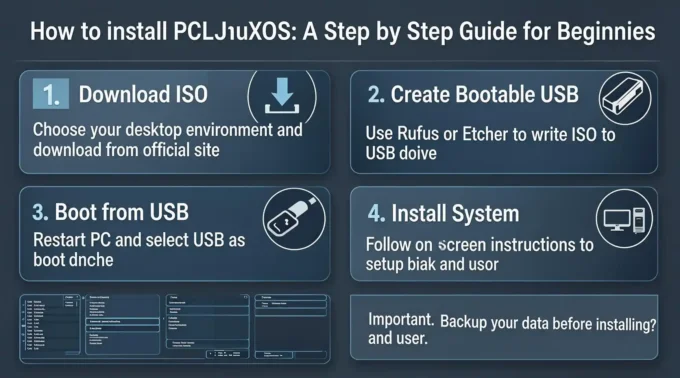
- Download the official ISO – Go to the GhostBSD download page and grab GhostBSD 26.1 (amd64) – Desktop Edition.
Tip: Choose the “torrent” link if you have a spotty connection; it’s more resilient to interruptions.
- Verify the ISO – Open a terminal (or PowerShell on Windows) and run:
- # Linux/macOS
- sha256sum ghostbsd-26.1-amd64.iso
- # Windows PowerShell
- Get-FileHash -Algorithm SHA256 .\ghostbsd-26.1-amd64.iso
Compare the output with the checksum posted on the download page. A mismatch means a corrupted download—redownload it before proceeding.

Step 1 – Create a Bootable USB Stick
On Windows
- Download Rufus (https://rufus.ie).
- Insert your USB drive, launch Rufus, and select the GhostBSD ISO.
- Keep the default settings (GPT for UEFI, FAT32) and click Start.
On macOS
- Install Etcher (https://www.balena.io/etcher).
- Select the ISO, choose the USB drive, and click Flash!.
On Linux
sudo dd if=ghostbsd-26.1-amd64.iso of=/dev/sdX bs=4M status=progress && sync
Replace /dev/sdX with your actual USB device (e.g., /dev/sdb).
After the flashing process finishes, safely eject the USB stick.
Step 2 – Boot From the USB
- Insert the USB into the target computer.
- Power on (or restart) and enter the firmware menu:
- BIOS: Usually F2, F10, or Delete.
- UEFI: Often Esc → Boot Menu, then select the USB.
- Choose UEFI mode if it appears—GhostBSD works best there.
- The GhostBSD live environment should appear; you’ll see a clean desktop with a “Install GhostBSD” icon.
Step 3 – Run the Installer
3.1 Start the Installer
Double‑click the Install GhostBSD icon. A wizard opens with the following screens:
- Welcome – Confirm language and keyboard layout.
- Installation Type – You have three choices:
- Erase disk and install (the simplest; wipes the whole drive).
- Install alongside another OS (creates a dual‑boot).
- Manual partitioning (for power users).
Choose Erase disk if you’re installing on a clean machine.
3.2 Disk Selection
Select the target drive from the drop‑down list. The installer will show a preview of the partition layout:
- 1 GB swap partition (adjustable).
- 20 GB root (/) partition for the OS.
- Optional /home partition (recommended for easy backups).
Press Next.
3.3 Set Up Your Account
Enter:
- Full name
- Username (lower‑case, no spaces)
- Password (twice)
Optionally tick “Log in automatically” if you don’t want a password prompt at startup.
3.4 Timezone & Network
Pick your city from the map or drop‑down, and confirm the network interface is active (the live environment should already be connected to Wi‑Fi/Ethernet).
3.5 Review & Install
The final screen summarizes everything. Double‑check the chosen drive and partitions—once you click Install, the changes are irreversible.
Press Install. The installer will:
- Format the partitions (UFS or ZFS—GhostBSD defaults to UFS).
- Copy the base system.
- Install the GNOME-based desktop environment (or MATE, depending on the ISO).
Expect a 10‑15 minute wait on a typical SSD; slower HDDs can take longer.
Step 4 – First Boot & Post‑Installation Tweaks
- Reboot when the installer finishes.
- Remove the USB drive when prompted.
- The system boots to the GhostBSD login screen—enter the credentials you set earlier.
4.1 Update the System
Open a terminal and run:
sudo pkg update && sudo pkg upgrade
This pulls the latest security patches and package updates.
4.2 Install Additional Software
GhostBSD ships with a curated app store, but you can also use FreeBSD’s ports:
sudo pkg install firefox libreoffice
4.3 Enable Drivers (if needed)
If you have a Wi‑Fi card that isn’t working out of the box, install the appropriate firmware:
sudo pkg install linux-firmware
4.4 Configure Automatic Updates (optional)
Edit /etc/crontab and add:
0 4 * * * root /usr/local/sbin/pkg update && /usr/local/sbin/pkg upgrade -y
This schedules a silent daily update at 4 AM.
🎉 You’re Done!
Congratulations—GhostBSD 26.1 is now installed, updated, and ready for daily use. From here you can explore the vibrant BSD community, set up your favorite development environment, or simply enjoy a rock‑solid desktop that’s less prone to the bloat and security issues that plague many mainstream Linux distros.
Frequently Asked Questions (FAQ)
| Question | Answer |
| Can I dual‑boot GhostBSD with Windows? | Yes. Choose “Install alongside another OS” during step 3.2. GhostBSD will create a GRUB entry that lets you pick Windows or GhostBSD at startup. |
| Do I need to use the ZFS file system? | GhostBSD defaults to UFS for simplicity, but you can select ZFS in the manual partitioning screen if you want snapshots and advanced data integrity features. |
| Will my hardware work out of the box? | Most common laptop/desktop hardware works. If you encounter issues with Wi‑Fi, graphics, or audio, the community forums (https://forums.ghostbsd.org) are an excellent place to find driver packages. |
| How do I revert back to my old OS? | If you performed a clean install, you’ll need to reinstall your previous OS from its own media. If you set up a dual‑boot, just boot into the other OS via GRUB. |
📣 Connect with the Community
- Official forum: https://forums.ghostbsd.org
- Discord channel: https://discord.gg/ghostbsd
- Reddit: r/GhostBSD
Feel free to drop a comment below if you hit any snags or have tips to share with fellow newcomers!
📢 Hashtags
#GhostBSD #BSDInstallation #OpenSourceDesktop
⚠️ Disclaimer
This guide is provided for informational purposes only. While every effort has been made to ensure the instructions are accurate and up‑to‑date, GhostBSD is a rapidly evolving operating system and hardware configurations can vary widely. Installing an OS involves repartitioning disks, which can lead to data loss if performed incorrectly. The author and publisher assume no responsibility for any loss of data, hardware damage, or other adverse outcomes resulting from the use of this guide. Always back up your important files and double‑check each step before proceeding.











Leave a comment