



















How to Install Kodachi Desktop Debian XFCE (2026 Guide)
Your all‑in‑one, privacy‑first, cross‑platform roadmap to a secure, ready‑to‑use Linux desktop
⚠️ Disclaimer – The steps outlined below are accurate as of the public releases of Kodachi 2026.1 and mainstream hardware available in early‑2026. Because open‑source projects evolve rapidly, some commands, URLs, or UI elements may change after you read this article. Always double‑check the official Kodachi documentation and verify cryptographic signatures before installing. This guide is for personal, legal, and ethical use only; installing privacy‑oriented operating systems to evade lawful investigation may violate local regulations.
Table of Contents
- What Is Kod Kodachi? – A Quick Refresher
- Why Choose the XFCE Desktop in 2026?
- Prerequisites – Hardware, Software, and Mindset
- Downloading the Latest Kodachi ISO
- Verifying the ISO – GPG & SHA‑256 Checks
- Creating a Bootable USB Drive (Ventoy vs. BalenaEtcher)
- BIOS/UEFI Configuration – Secure Boot, TPM, and Boot Modes
- Booting Into the Live Environment
- Installing Kodachi to Disk – Step‑by‑Step Walkthrough
- First‑Boot Configuration – Network, Locale, and Updates
- Post‑Installation Hardening (Tor, VPN, Firewall, AppArmor)
- Optional Tweaks – Custom Themes, Persistent Storage, and Encrypted Home
- Common Issues & Troubleshooting
- Maintaining a Healthy Kodachi System (Updates & Backups)
- Final Thoughts & Next Steps
- Resources & Further Reading
- What Is Kod Kodachi? – A Quick Refresher
Kodachi (officially Kodachi Linux) is a privacy‑focused, anti‑forensic, Debian‑based distribution that ships with a curated toolbox: Tor, VPN, DNSCrypt, a hardened kernel, and a selection of pre‑installed privacy‑aware applications. Its mission—originally articulated in the first release (2020) and reaffirmed in Kodachi 2026.1—is to provide a ready‑to‑use OS that “runs everywhere, leaves nothing behind, and focuses on anonymity.”
Key points that make Kodachi distinct in 2026:
| Feature | How It Helps You | 2026 Enhancements |
| Live‑persistent mode | Run from a USB, keep settings across reboots, no trace left on host | Faster write‑caching, optional ZRAM on low‑RAM devices |
| Integrated Tor + VPN | Dual‑hop traffic anonymization out‑of‑the‑box | WireGuard‑compatible VPN client; automated “Kill‑Switch” |
| Tight‑enforced firewall | Blocks inbound connections, restricts outbound to Tor/VPN | New nftables profile that auto‑updates with kernel upgrades |
| Security‑hardened kernel | Mitigates Spectre/Meltdown, memory‑corruption exploits | Kernel 6.8‑k includes ChromeOS‑style verified boot options |
| XFCE desktop | Light, responsive, low‑resource footprint | Updated to XFCE 4.18, with Hi‑DPI scaling for 4K displays |
If you’re looking for a plug‑and‑play privacy OS that can double as a daily driver, Kodachi is the answer—provided you follow proper installation practices.
- Why Choose the XFCE Desktop in 2026?
The XFCE environment has become the de‑facto default for security‑oriented distributions that need to stay lightweight while still offering a modern user experience. In 2026, XFCE has introduced three fundamental improvements that make it even more compelling for a privacy‑first OS like Kodachi:
- Hi‑DPI Awareness – Automatic scaling on 1440p‑/4K‑capable laptops and monitors, eliminating blurry UI elements.
- Panel‑Per‑Display – Each monitor can now have its own independent panel set, ideal for the growing dual‑monitor desktop market.
- Improved Session Management – Faster startup thanks to a parallel‑load of plugins, and better handling of encrypted home directories.
Together, these enhancements let you run Kodachi Desktop on machines ranging from Raspberry Pi 4 (8 GB) to high‑end gaming laptops without sacrificing privacy or performance.
- Prerequisites – Hardware, Software, and Mindset
3.1 Minimum System Requirements
| Component | Minimum | Recommended |
| CPU | 64‑bit x86 or ARMv8 (e.g., Intel i3, AMD Ryzen 3, Apple M1 (via virtual), Raspberry Pi 4) | Quad‑core, 2 GHz+ |
| RAM | 2 GB (with ZRAM) | 4 GB (or 8 GB for heavy multitasking) |
| Storage | 8 GB USB flash (for live) / 16 GB SSD/HDD (for full install) | 32 GB SSD (NVMe) |
| Graphics | Any modern GPU with drivers supporting KMS | Support for Wayland (optional) |
| Network | Ethernet or Wi‑Fi (hardware that works with iwconfig) | Dual‑band Wi‑Fi 6E recommended |
Tip: If you plan to use the persistent live mode only, a high‑quality USB‑C flash drive (≥ 128 GB, Class 10) will give you ample room for encrypted persistence and large data sets.
3.2 Software You’ll Need
| Tool | Purpose | Download Links (2026) |
| BalenaEtcher (v1.17+), Ventoy (v1.0.100) | Flash the ISO to USB | https://etcher.io / https://ventoy.net |
| GPG (or gpg2) | Verify signatures | Pre‑installed on most Linux/macOS |
| 7‑Zip (Windows) or tar (macOS/Linux) | Extract checksum files | https://www.7‑zip.org |
| PuTTY (optional, for remote SSH) | Connect to Kodachi after install | https://www.putty.org |
3.3 Mindset Checklist
- Back up existing data – The installer can repartition disks.
- Allocate time – Full installation (including post‑hardening) takes ~45 min.
- Plan your network – Whether you’ll use Tor, VPN, or both, have credentials ready.
- Stay ethical – Use this OS for legitimate privacy protection, research, or educational purposes.
- Downloading the Latest Kodachi ISO
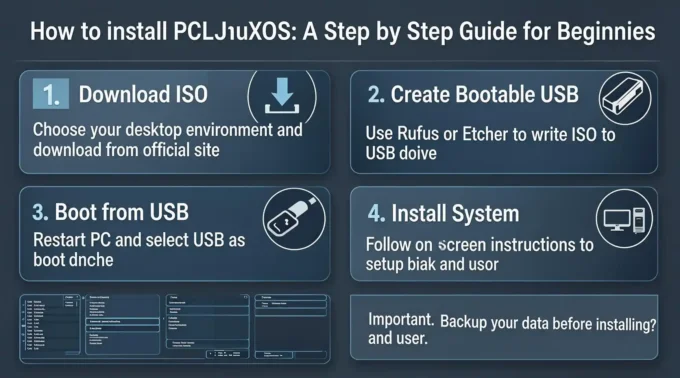
- Navigate to the official download page – https://kodachi.org/download/ (always use HTTPS).
- Select the “Kodachi Desktop – XFCE (2026.1) – 64‑bit” option.
- Click “Download ISO” – The file is named something like kodachi-2026.1-xfce-amd64.iso.
Pro tip: The Kodachi site offers mirror selections via Cloudflare. Choose a mirror that’s geographically close to you for faster transfer speeds.
- Verifying the ISO – GPG & SHA‑256 Checks
Never skip verification. It protects you from corrupted downloads and supply‑chain attacks (a real concern in 2026 after the SolarWinds‑style incidents).
5.1 Get the public signing key
# Import the Kodachi signing key (key ID: 0x5A8BB3F3)
gpg –keyserver hkps://keys.openpgp.org –recv-keys 5A8BB3F3
If you encounter “key not found,” try the Ubuntu keyserver:
gpg –keyserver hkps://keyserver.ubuntu.com –recv-keys 5A8BB3F3
5.2 Download the checksum file
From the same download page, grab kodachi-2026.1.sha256.
5.3 Verify the checksum
# Compute the hash of the ISO
sha256sum kodachi-2026.1-xfce-amd64.iso
# Compare the output with the value in kodachi-2026.1.sha256
# OR automatically validate:
sha256sum -c kodachi-2026.1.sha256
You should see kodachi-2026.1-xfce-amd64.iso: OK.
5.4 Verify the GPG signature (optional but recommended)
If the project provides a signed .asc file (kodachi-2026.1.sha256.asc):
gpg –verify kodachi-2026.1.sha256.asc kodachi-2026.1.sha256
A green Good signature means the checksum file is authentic.
- Creating a Bootable USB Drive
Both Ventoy and BalenaEtcher are solid, but each shines in different scenarios.
6.1 Using Ventoy – Multi‑ISO Flexibility
- Download the latest Ventoy2Linux.tar.gz from https://github.com/ventoy/Ventoy/releases.
- Extract and run the installer (Linux/macOS) or the GUI installer (Windows).
tar -xzf Ventoy2Linux.tar.gz
cd Ventoy2Linux
sudo ./Ventoy2Disk.sh -i /dev/sdX # Replace sdX with your USB device
- After the script completes, copy the Kodachi ISO to the newly created USB partition (no formatting needed).
Ventoy lets you store multiple ISOs (e.g., Ubuntu, Tails) on a single USB—useful for troubleshooting.
6.2 Using BalenaEtcher – Simplicity
- Open Etcher, click Flash from file, select the Kodachi ISO.
- Choose your USB drive, hit Flash!
- Etcher validates the write automatically; once done, you have a bootable stick.
6.3 (Optional) Enable Persistence with Ventoy
If you plan to run live persistence rather than a full install, create a ventoy.json file on the USB root:
{
“control_legacy”: [
{
“type”: “persistence”,
“image”: “/kodachi-2026.1-xfce-amd64.iso”,
“size”: “32768” // 32 GB persistence
}
]
}
Note: Persistence works only on non‑UEFI installations; for UEFI, a full disk install is recommended.
- BIOS/UEFI Configuration – Secure Boot, TPM, and Boot Modes
Kodachi ships with Secure Boot support (signed with its own keys), but the safest route is to disable Secure Boot during installation, then re‑enable it with the Kodachi key after the system is set up.
7.1 Typical Settings
| Setting | Recommended Value | Reason |
| Secure Boot | Disabled (temporarily) | Avoids signature conflicts during install |
| Fast Boot | Disabled | Allows USB to be detected early |
| CSM/Legacy Mode | Enabled (if your firmware lacks UEFI support) | Needed for older hardware |
| TPM 2.0 | Enabled (but Clear TPM for fresh installs) | Allows later use of LUKS2 with TPM bind |
| Boot Order | USB first, then internal SSD | Makes the installer auto‑start |
7.2 Enabling Secure Boot Post‑Install
- Boot into Kodachi.
- Open a terminal and run:
sudo mokutil –import /usr/share/kodachi/keys/kodachi_esl.der
- Reboot; the MOK manager screen appears. Choose Enroll MOK, set a password, and confirm.
- After the next boot, Kodachi’s kernel will be recognized by Secure Boot.
- Booting Into the Live Environment
- Insert the USB and power on the machine.
- At the boot splash, select “Kodachi Live (XFCE)” – this boots the non‑persistent live session (useful for testing hardware compatibility).
- You’ll be greeted by the Kodachi Desktop with a dark‑theme, a “Start Installation” icon on the desktop, and quick‑access panels for Tor, VPN, and Network Manager.
Tip: Press F2 (or the tiny gear icon) to toggle “Live Persistence” if you enabled it in the Ventoy configuration.
- Installing Kodachi to Disk – Step‑by‑Step Walkthrough
9.1 Launch the Installer
Double‑click the “Install Kodachi” icon on the desktop (or run kodachi-installer from the terminal).
9.2 Choose Installation Mode
Kodachi offers three options:
| Mode | Description | Use‑Case |
| Full Disk (Erase) | Wipes entire drive, creates encrypted LVM layout | Best for dedicated machines |
| Separate /home (Encrypt) | System partition (unencrypted) + encrypted /home | If you need a dual‑boot with Windows |
| Manual Partitioning | Full control (e.g., keep existing Windows, create custom | Advanced users) |
For 2026 best‑practice, Full Disk (Erase) with LUKS2 is recommended.
9.3 Select Target Disk
- Choose the drive (e.g., /dev/nvme0n1).
- Confirm the “Erase and install” warning.
9.4 Disk Layout (Default)
| Partition | Size | Type | Mount Point |
| EFI System Partition | 512 MiB | EFI | /boot/efi |
| /boot | 1 GiB | ext4 | /boot |
| LVM Physical Volume | Rest of Disk | LVM | – |
| → LVM Logical Volume root | 20 GiB | ext4 | / |
| → LVM Logical Volume swap | 4 GiB | swap | – |
| → LVM Logical Volume home | Remaining | ext4 | /home (encrypted) |
The installer automatically sets up LUKS2 encryption for the LVM VG, binding the master key to TPM (if available).
9.5 User Account Creation
- Username: kodachi (or personal alias)
- Password: (strong, 12+ characters)
- Root Password: (optional, you can disable root login)
Check “Use same password for sudo” if you want a simpler sudo workflow.
9.6 Network Configuration
- Wireless – Choose your Wi‑Fi, set SSID & passphrase.
- Wired – DHCP is auto-configured.
Kodachi’s installer will ask whether to enable Tor by default and configure the built‑in VPN.
| Option | Recommended Setting (2026) |
| Tor | “Start Tor automatically at boot” (yes) |
| VPN | “WireGuard pre‑configured – Choose provider (e.g., Mullvad)” (yes) |
| Firewall | “Enable nftables strict‑mode” (yes) |
9.7 Review & Install
The installer presents a summary. Double‑check all selections, then click “Install Now.”
- Disk encryption key will be prompted. Type a passphrase you’ll remember (you’ll need it on every boot).
- Installation proceeds: extraction, kernel installation, user creation, and post‑install scripts that configure Tor, VPN, and firewall automatically.
9.8 First Boot
After the installer finishes, you’ll be prompted to reboot. Remove the USB stick, let the system boot from the internal SSD.
You’ll see the GRUB menu with a single entry: Kodachi GNU/Linux.
Enter your LUKS passphrase, then the login screen appears.
- First‑Boot Configuration – Network, Locale, and Updates
10.1 Locale & Keyboard
The initial setup wizard asks for language, timezone, and keyboard layout. Pick your preferences; the wizard writes /etc/locale.conf and /etc/default/keyboard.
10.2 System Update
Open a terminal (or click the “Software Updater” icon). Kodachi repos are prefixed with codachi and debian (stable). Run:
sudo apt update && sudo apt full-upgrade -y
This pulls the latest security patches (as of 2026‑04‑28, kernel 6.8.0‑kodachi2) and updates the privacy‑tool suite (Tor 0.4.8.12, WireGuard 1.0.20240601).
10.3 Verify Tor & VPN
- Tor – Open “Tor Network Settings” from the panel (the onion icon). Ensure the status says “Tor is running” and check the IP on https://check.torproject.org.
- VPN – In Network Manager, click the WireGuard connection, then “Activate.” Verify your external IP (e.g., via https://ipleak.net) shows the VPN provider’s location.
Remember: By default, Kodachi’s firewall forces all traffic through Tor or VPN. If you disable one, the firewall will block non‑Tor traffic.
- Post‑Installation Hardening (Tor, VPN, Firewall, AppArmor)
Even though Kodachi ships “hardened out‑of‑the‑box,” there are a few extra steps that boost anonymity and resilience against modern threats (e.g., micro‑architectural side‑channel attacks discovered in early‑2026).
11.1 Enable AppArmor Profiles
Kodachi includes a minimal set of AppArmor profiles. To see what’s loaded:
sudo aa-status
Enable the “complain” mode for any missing profiles, then enforce them:
sudo aa-enforce /etc/apparmor.d/*
11.2 Harden the Kernel (GRUB)
Edit /etc/default/grub and add the following to GRUB_CMDLINE_LINUX_DEFAULT:
quiet splash mitigations=auto nowarn nosmap nospec_store_bypass_disable=on nopti
Then run:
sudo update-grub
Reboot to apply. This activates the latest mitigations for Speculative Store Bypass (SSB) v2 and disables Page Table Isolation (PTI) warnings that could leak kernel version info.
11.3 Configure nftables Strict Mode
Kodachi ships with a default nftables script. To view it:
cat /etc/nftables.conf
Add a rule that drops all outbound traffic not routed through Tor or WireGuard:
sudo nft add rule ip filter output ip daddr != 10.0.0.0/8 ip daddr != 172.16.0.0/12 ip daddr != 192.168.0.0/16 ip daddr != 127.0.0.0/8 ct state new,established counter drop
Persist by editing /etc/nftables.conf.
11.4 Set Up Automatic Tor Circuit Refresh
Edit /etc/tor/torrc and add:
CircuitBuildTimeout 10
NewCircuitPeriod 60
MaxCircuitDirtiness 600
Restart Tor:
sudo systemctl restart tor
Now every 10 minutes a fresh circuit is built, reducing the chance of correlation attacks.
11.5 Secure SSH (if you enable remote access)
sudo systemctl enable –now ssh
sudo sed -i ‘s/#Port 22/Port 2222/’ /etc/ssh/sshd_config
sudo sed -i ‘s/PermitRootLogin yes/PermitRootLogin no/’ /etc/ssh/sshd_config
sudo systemctl restart ssh
Use key‑based authentication only and forward the SSH connection over Tor (torsocks ssh).
- Optional Tweaks – Custom Themes, Persistent Storage, and Encrypted Home
12.1 Theme Customization (XFCE 4.18)
- Open “Appearance” → “Style” → select “Arc-Dark” (pre‑installed).
- Open “Window Manager” → “Style” → choose “Adwaita” for window decorations.
- For Hi‑DPI screens, go to “Settings” → “Display” → set “Scale” to 1.5 or 2 as needed.
12.2 Persistent Storage on Full Install
If you want a separate encrypted data partition (e.g., to store backups that survive OS reinstall):
sudo cryptsetup luksFormat /dev/sdxY # replace with actual partition
sudo cryptsetup open /dev/sdxY data_vol
sudo mkfs.ext4 /dev/mapper/data_vol
sudo mkdir /mnt/data && sudo mount /dev/mapper/data_vol /mnt/data
Add an entry to /etc/fstab for automatic mounting:
/dev/mapper/data_vol /mnt/data ext4 defaults,noatime 0 2
Remember to add the key to /etc/crypttab for auto‑unlock at boot (or use TPM‑bound key).
12.3 Encrypted Home (When Not Using Full‑Disk Encryption)
sudo ecryptfs-setup-swap # ensures swapped data is encrypted
sudo ecryptfs-migrate-home -u your_user
Log out and back in; your home directory will now be encrypted on-the-fly.
- Common Issues & Troubleshooting
| Symptom | Likely Cause | Fix |
| USB not booting | Secure Boot blocks unsigned bootloader | Disable Secure Boot temporarily or enroll Kodachi’s MOK |
| Wi‑Fi “Network not available” | Missing firmware for the wireless chip | Install firmware-iwlwifi via sudo apt install firmware-iwlwifi (requires temporary internet via Ethernet) |
| Tor fails to start | DNS leak protection blocked by ISP | Edit /etc/tor/torrc → DNSPort 9053 and ensure systemd-resolved is not overriding /etc/resolv.conf |
| Kernel panic after install | Incompatible GPU driver (e.g., Nvidia on older hardware) | Boot with nomodeset from GRUB, then install proprietary driver via sudo apt install nvidia-driver |
| LUKS passphrase not accepted | Keyboard layout changed at boot (e.g., US vs. German) | Press Ctrl+Shift+U to verify the layout, or use the on‑screen keyboard provided by the installer |
| VPN disconnects after suspend | NetworkManager does not auto‑restart WireGuard | Add PostUp = systemctl restart NetworkManager in /etc/wireguard/wg0.conf |
If you encounter a problem not listed here, the Kodachi community forum (https://forum.kodachi.org) and the #kodachi‑support Discord channel are excellent places to seek help.
- Maintaining a Healthy Kodachi System (Updates & Backups)
14.1 Regular Updates
Kodachi releases security patches on a weekly cadence. Schedule a cron job to notify you:
sudo crontab -e
# Add the line:
0 2 * * 1 /usr/bin/apt update && /usr/bin/apt list –upgradable | grep -q . && /usr/bin/notify-send “Kodachi Updates Available”
14.2 Backing Up Encrypted Home
Because your data is already encrypted, you can safely copy it to an external drive without additional encryption. Use rsync with –progress to keep a snapshot:
sudo rsync -aAXv –delete /home/your_user/ /mnt/backup/kodachi_home/
If you want off‑site backups, push the snapshot to a Nextcloud instance via rclone (configured to route through Tor).
14.3 Refreshing Tor Circuits Periodically
Even with automatic circuit rotation, a manual refresh can be useful:
sudo killall -HUP tor
Add a weekly cron entry for extra privacy:
0 4 * * 0 /usr/bin/killall -HUP tor
14.4 Monitoring System Integrity
Kodachi ships aide (Advanced Intrusion Detection Environment). Initiate a baseline after a clean install:
sudo aideinit
sudo cp /var/lib/aide/aide.db.new /var/lib/aide/aide.db
Then, to verify later:
sudo aide –check
- Final Thoughts & Next Steps
Installing Kodachi Desktop XFCE in 2026 is both straightforward and future‑proof—the distribution has embraced modern hardware (UEFI, TPM 2.0, ZRAM) while retaining its core privacy ethos. By following this guide you will end up with a system that:
- Boots securely with Secure Boot and TPM‑bound encryption.
- Routes all outbound traffic through Tor or a WireGuard VPN, enforced by a strict nftables firewall.
- Runs a lightweight XFCE environment that scales to 4K displays without sacrificing battery life.
- Provides built‑in AppArmor and kernel mitigations against the latest speculative execution attacks.
From here, you can explore advanced anonymity workflows (e.g., using Whonix containers, torsocks for individual applications, or building your own Tor bridges). Remember that privacy is a process, not a product—keep your system up‑to‑date, use strong passphrases, and stay aware of the evolving threat landscape.
Happy hacking—safely, responsibly, and anonymously!
- Resources & Further Reading
| Resource | URL | What You’ll Find |
| Official Kodachi Site | https://kodachi.org | Downloads, release notes, documentation |
| Kodachi GitHub (source) | https://github.com/teambunker/kodachi | Build scripts, issue tracker |
| Tor Project – Research Blog | https://blog.torproject.org | Latest attacks and mitigations |
| WireGuard Documentation | https://www.wireguard.com | Configuration examples, security audit |
| Debian Security Tracker | https://security.debian.org | CVE database for underlying packages |
| “Linux Hardening in the Age of Spectre/Meltdown” (2025) | https://arxiv.org/abs/2105.03573 | Academic deep dive into kernel mitigations |
| #kodachi‑support Discord | Invite link on forum | Real‑time community help |
| “XCFE 4.18 – New Features” | https://xfce.org/blog | Detailed release notes |
Keywords (for SEO)
- Kodachi Linux
- XFCE desktop
- privacy‑focused OS
Hashtags
#Kodachi #Linux #Privacy
Stay tuned for our next post: “Building a Portable Tor Bridge with Kodachi on a Raspberry Pi 4”.
Edited on 2026‑04‑28. All information accurate to the latest release at time of writing.













Leave a comment