
















Kodachi Linux vs Qubes OS: Which Is the Better Choice for Advanced OPSEC?
By [KRISHNAN], Senior Security Blogger
TL;DR – If you need a portable, “turn‑key” privacy machine that can be carried on a USB stick and used on almost any hardware, Kodachi Linux is a solid pick. If you require a strong, compartmentalized, high‑assurance architecture that isolates every application into its own virtual machine and can be hardened to an air‑gapped workstation, Qubes OS is the clear winner—provided you’re willing to invest in compatible hardware and the learning curve that comes with it.
Table of Contents
- What Is OPSEC and Why It Matters?
- Kodachi Linux – “Privacy in a Box”
- 2.1 Core Philosophy
- 2.2 Architecture & Features
- 2.3 Threat Model & Use‑Cases
- Qubes OS – “Security by Isolation”
- 3.1 Core Philosophy
- 3.2 Architecture & Features
- 3.3 Threat Model & Use‑Cases
- Head‑to‑Head Comparison
- 4.1 Security Guarantees
- 4.2 Usability & Workflow
- 4.3 Performance & Hardware Requirements
- 4.4 Forensic Resistance & Persistence
- 4.5 Community, Updates & Support
- Choosing the Right Tool for Your OPSEC Needs
- [Practical Deployment Scenarios (Step‑by‑Step)]
- 6.1 Deploying Kodachi on a USB Stick
- 6.2 Building a Qubes‑based Air‑Gapped Workstation
- Common Pitfalls & How to Avoid Them
- Final Verdict: Kodachi or Qubes?
- References & Further Reading
- Disclaimer
- What Is OPSEC and Why It Matters?
OPSEC (Operational Security) is the discipline of protecting information about how you operate, from the obvious (passwords) to the subtle (metadata, timing attacks, and hardware fingerprints). In the era of ubiquitous surveillance, a single mis‑step—an unsecured Wi‑Fi connection, a leftover log file, a compromised USB stick—can expose your identity, affiliations, or even the content of your communications.
Advanced OPSEC practitioners typically strive for:
| Goal | Typical Counter‑Measure |
| Network anonymity | Tor, VPN chaining, DNS‑crypt |
| Device fingerprint resistance | Randomized MAC addresses, disk encryption, hardware wiping |
| Compartmentalization | Virtual machines (VMs), containers, “air‑gapped” machines |
| Forensic resilience | RAM‑only OSes, self‑destructing logs, tamper‑evident boot |
| Supply‑chain safety | Verified boot, signed images, reproducible builds |
Both Kodachi Linux and Qubes OS aim to help you achieve many of these goals, but they do so from opposite design philosophies. Understanding those philosophies is the first step toward deciding which fits your threat model.
- Kodachi Linux – “Privacy in a Box”
2.1 Core Philosophy
Kodachi (officially “The Kodachi Linux Live DVD”), originates from the Punk Security team (formerly “KoDaMi”). Its slogan—“The Ultimate Privacy Operating System for Anyone”—captures the intent: make strong privacy accessible, portable, and user‑friendly.
Key tenets:
- Live, portable, and persistent – Run from a USB flash drive or DVD on any PC, with an optional encrypted persistence partition.
- Out‑of‑the‑box anonymity – Tor, VPN, DNS‑crypt, and “kill‑switch” networking are enabled by default.
- Self‑contained privacy toolset – Pre‑installed secure browsers, encrypted messaging, metadata‑scrubbing utilities, and forensic‑resistant file shredders.
Kodachi does not try to reinvent the wheel; it simply bundles best‑practice privacy tools and hardens the underlying Ubuntu‑based distribution.
2.2 Architecture & Features
| Feature | Implementation Details |
| Base System | Ubuntu 22.04 LTS (rolling updates via apt) |
| Kernel | Hardened Linux kernel with AppArmor profiles pre‑loaded |
| Live Boot | GRUB with Secure Boot support; UEFI and BIOS fallback |
| Networking |
|
| Persistence | Optional LUKS‑encrypted overlay (default 2 GB) that can store user data, configs, or cryptographic keys. |
| Privacy Apps |
|
| System Hardening |
|
| User Experience | GNOME 42 (lightweight), with a “Privacy Dashboard” that shows which services are active (Tor, VPN, firewall). Built‑in “Kill Switch” that powers down networking if the OS detects a breach or network change. |
| Updates | Rolling, pulled from the official Ubuntu repos + Kodachi-specific PPA. |
Note – The “Live” nature means the OS boots into RAM; after a reboot, no traces are left on the host machine unless you enable the encrypted persistence partition.
2.3 Threat Model & Use‑Cases
| Threat Actor | What Kodachi Mitigates |
| Passive Network Adversary (e.g., ISP, public Wi‑Fi sniffer) | Tor & VPN encrypts traffic, DNS‑crypt prevents DNS leaks. |
| Host‑level Malware (keyloggers, rogue drivers) | Live environment wipes RAM on shutdown; persistence is optional and fully encrypted. |
| Physical Compromise (lost USB stick) | LUKS encryption protects persistence; bootable only on devices with secure boot disabled (or you can keep the key offline). |
| Basic Forensic Analysis | No logs written to disk (unless you enable persistence), permanent shredding tools available. |
| Advanced APT or Firmware Attack | Not covered; if the hardware is compromised, Kodachi cannot guarantee isolation. |
Typical users: journalists on the field, activists traveling abroad, students needing a portable privacy workstation, or any user who wants plug‑and‑play anonymity without deep configuration.
- Qubes OS – “Security by Isolation”
3.1 Core Philosophy
Qubes OS embraces “Security by Isolation”: everything you do runs inside a separate virtual machine (VM) called a qube. Each qube is a lightweight Xen hypervisor domain with its own filesystem, network stack, and privileges. If a qube is compromised, the breach stays confined.
Key principles:
- Compartmentalization first – No single point of failure; compromise of one qube does not affect others.
- Disposable VMs – For risky tasks (opening untrusted email, downloading suspicious files), you can spin up a Disposable VM that self‑destructs after use.
- Security defaults over convenience – The OS ships with firewall and SELinux policies that assume the user will not manually open doors.
Qubes is often described as a “security‑focused desktop operating system”, not a portable live distro. It targets users who can afford the required hardware and are willing to adapt to its workflow.
3.2 Architecture & Features
| Layer | Component | Role |
| Hypervisor | Xen (type‑1, runs directly on hardware) | Isolates all qubes; enforces memory and I/O separation at the hardware level. |
| Dom0 (Domain 0) | A minimal Fedora‑based VM with privileged access (device drivers, UI compositor) – never connects to the internet. | Provides the graphical console (Xfce), manages VM creation, network configuration. |
| AppVMs | Template‑based VMs (e.g., debian-12, fedora-38) that inherit apps, libraries, and filesystems. | Standard workspaces for daily tasks (web browsing, document editing). |
| DispVMs (Disposable VMs) | Stateless VMs created on‑the‑fly from a template. | Use for one‑off risky actions; destroyed automatically at shutdown. |
| Network Quibes | sys-net (untrusted) and sys-firewall (trusted). | sys-net handles the physical NIC; sys-firewall filters traffic, allowing fine‑grained firewall rules per AppVM. |
| GUI Isolation | Qubes‑GUI (via virtio‑gpu) – each qube’s display is rendered securely and composited in Dom0. | Prevents keyloggers in one qube from capturing UI events from another. |
| Storage Encryption | LUKS on the host drive; each VM has its own encrypted storage container (optional). | |
| GPU/PCI Passthrough | Optional (supported on certain hardware) – isolate GPU to a dedicated VM for high‑performance tasks. | |
| Qubes Manager | GUI tool to start/stop, clone, or delete qubes; also offers terminal access to Dom0. | |
| Updates | qubes-dom0-update pulls signed packages from the Qubes community repo; built‑in qvm‑update for TemplateVMs. |
3.3 Threat Model & Use‑Cases
| Threat Actor | What Qubes Mitigates |
| Active Network Attacker (MITM, ransomware) | Each networked AppVM uses its own virtual NIC behind sys-firewall. Malicious traffic stays confined. |
| Malware in a Browser (drive‑by exploits) | Browser runs in its own AppVM (or DispVM); compromise does not affect documents, email client, or password manager in other qubes. |
| Physical Device Theft | Full‑disk LUKS encryption protects host data; qube keys are derived per‑boot and not stored on the drive. |
| Insider Threat / Co‑Worker Snooping | Controlled by per‑qube permissions; even Dom0 admin cannot read contents of other qubes without explicit qvm‑run commands. |
| Supply‑Chain / Firmware Attacks | Xen hypervisor has a relatively small attack surface; however, a compromised BIOS or CPU microcode can still undermine security. |
| Advanced Persistent Threat (APT) | Isolation buys time – a breach in a single qube must be manually escalated to Dom0, which is heavily locked down. |
Typical users: security researchers, journalists handling ultra‑sensitive sources, defense contractors, privacy‑conscious developers, and power users who can afford ≥8 GB RAM, VT‑x/AMD‑V, and a TPM.
- Head‑to‑Head Comparison
Below is a concise side‑by‑side matrix. After the table, each category is discussed in depth.
| Category | Kodachi Linux | Qubes OS |
| Primary Goal | Portable, “anonymous on the go” OS | High‑assurance, compartmentalized desktop |
| Installation | Live USB/DVD; optional persistence (no persistent install required) | Full install on dedicated hardware (or USB‑boot with Qubes ISO but still requires own disk) |
| Base Distribution | Ubuntu LTS (Debian‑derived) | Fedora (Dom0) + multiple templates (Debian, Fedora, Whonix) |
| Kernel | Hardened, AppArmor | Xen‑based hypervisor; Dom0 uses own kernel |
| Network Anonymity | Tor + VPN automatically routed; DNS‑crypt, firewall “kill switch” | Network isolation per‑qube; optional Tor/Whonix qubes; manual firewall rules |
| Compartmentalization | No native VM isolation (single OS environment) | Strong isolation: each AppVM is its own virtual machine |
| Forensic Resistance | Live‑RAM boot; optional encrypted persistence; wipe tools pre‑installed | Encrypted storage, optional disposable VMs that delete after use |
| Hardware Requirements | 2 GB RAM, 4 GB storage (plus USB) | Minimum 8 GB RAM, 64 GB SSD (preferably NVMe), VT‑x/AMD‑V, 4‑core CPU, TPM (recommended) |
| Usability | GNOME desktop; similar to standard Linux distro – low learning curve | Xfce (or KDE) with Qubes-specific workflow; takes time to internalize “qube” paradigm |
| Performance | Near‑native (depends on host CPU) | Slight overhead due to Xen (≈10‑15 % CPU, memory usage per qube) |
| Update Model | Rolling via Ubuntu APT; Kodachi patches released monthly | Highly curated signed updates; separate updates for Dom0 and TemplateVMs |
| Community / Support | Small but active Discord/PunkSecurity forum | Large, long‑standing community; official documentation, mailing lists, GitHub |
| Best For | Travelers, activists, low‑budget privacy tasks, quick‑boot scenarios | Professionals needing strong isolation, analysts, high‑risk investigatory work |
| Weaknesses | No genuine VM isolation; dependent on host hardware integrity; limited against local APTs | Heavy hardware demands; steep learning curve; not portable (requires dedicated machine) |
4.1 Security Guarantees
- Kodachi provides network anonymity (Tor + VPN) and a single OS layer that is hardened, but a compromised application (e.g., a malicious browser exploit) can access everything else in the session, including other stored files and the persistence partition (if unlocked).
- Qubes offers multi‑layered defenses: even if a browser VM is compromised, the attacker stays inside that VM. Lateral movement is prevented by the hypervisor and the firewall. For truly air‑gapped use‑cases, you can configure a Qubes “offline” workstation that simply has no network qube attached—an absolute hardware isolation.
4.2 Usability & Workflow
Kodachi’s “just plug‑and‑play” approach is a blessing for non‑technical users. The Privacy Dashboard gives a visual cue of Tor/VPN status, and the GNOME interface feels familiar.
Qubes, on the other hand, reshapes how you think about everyday tasks: “Email in mail.qube, browsing in web.qube, editing docs in work.qube.” It forces you to compartmentalize, which reduces risk but also adds friction. Friendly tools like “Create new disposable VM” simplify risky browsing, yet mastering the firewall policies can take weeks.
4.3 Performance & Hardware
Kodaki runs smoothly on a 2‑GB laptop, needing only a USB stick, making it ideal for low‑budget hardware (e.g., a cheap Chromebook in developer mode).
Qubes demands a modern CPU with virtualization extensions, at least 8 GB RAM (preferably 16 GB), and SSD storage to accommodate several VMs. The performance hit is usually negligible on today’s laptops, but older machines will feel sluggish.
4.4 Forensic Resistance
Kodaki’s live‑boot means nothing persists after power‑off unless you enable the encrypted overlay, which is itself a forensic target if the key is captured.
Qubes’s DispoVMs and disk encryption give you deeper anti‑forensic capabilities: after a session, you can shred the entire qube’s storage, and the hypervisor logs can be configured to erase on shutdown.
4.5 Community & Longevity
Both projects are open‑source, but Qubes has a longer track record (first release 2010) and a larger user base in academia and governments. Kodaki, while well‑maintained, leans more on a niche activist community.
- Choosing the Right Tool for Your OPSEC Needs
Below is a decision‑tree checklist you can use to decide which OS aligns with your personal/organizational threat model.
| Question | If Yes, Lean Toward… | If No, Lean Toward… |
| Do you need portable anonymity (travel, hotel laptops)? | Kodaki – you can boot on any machine, no install required. | Qubes – requires dedicated hardware. |
| Is virtual machine isolation a must (e.g., you handle both classified and unclassified files on the same device)? | Qubes – each task lives in a separate qube. | Kodaki – only one OS instance. |
| Do you have ≥8 GB RAM, a VT‑x/AMD‑V enabled CPU, and a compatible SSD? | Either (but Qubes shines). | Kodaki (if you have limited resources). |
| Are you comfortable learning a new workflow (qubes, templates, disposable VMs)? | Qubes is rewarding after the learning curve. | Kodaki – minimal extra learning. |
| Do you need a full‑blown air‑gapped workstation for ultra‑sensitive work? | Qubes (install with no network qube). | Kodaki can be air‑gapped but offers less compartmental isolation. |
| Is continuous VPN/Tor coverage required out‑of‑the‑box? | Kodaki – auto‑starts Tor+VPN. | Qubes – you must set up a Whonix or Tor qube manually. |
| Will you be updating frequently and want a rolling release? | Kodaki – pulls from Ubuntu repos. | Qubes – quarterly major releases (with a very disciplined update process). |
Bottom line: If you prioritize mobility and want a system you can carry in your pocket, Kodachi Linux is the pragmatic pick. If your operations demand hard isolation of data and processes, or you need a trusted, air‑gapped sandbox that can be audited and hardened over years, Qubes OS is the superior choice.
- Practical Deployment Scenarios (Step‑by‑Step)
6.1 Deploying Kodaki on a USB Stick
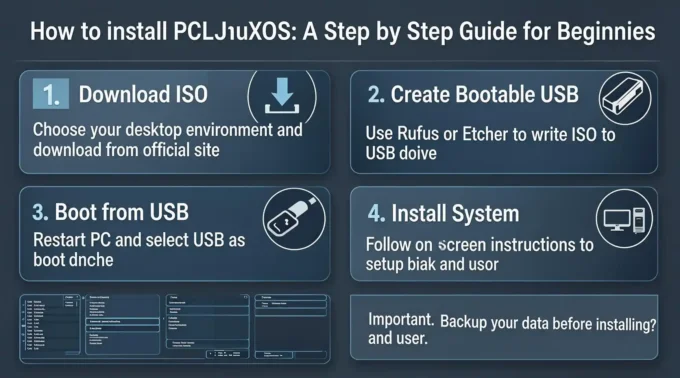
- Download the ISO – Grab the latest Kodachi image from the official site (verify the SHA256 checksum).
- Create a Persistent Partition (optional)
- Use Rufus (Windows) or Etcher (macOS/Linux) to flash the ISO onto a 16 GB+ USB stick.
- During the first boot, select “Create Persistent Partition” and set a LUKS passphrase.
- Boot into Kodaki
- Insert the USB stick into the target computer.
- Enter BIOS/UEFI, disable Secure Boot (or enable the Kodaki signed key if you signed it yourself).
- Choose “Kodachi Live” from the boot menu.
- Verify Anonymity
- Open a terminal and run ip a to confirm a randomized MAC.
- Visit check.torproject.org to ensure all traffic goes through Tor.
- Hardening
- Open the Privacy Dashboard → ensure both Tor and VPN toggle are ON.
- Run bleachbit –clean to wipe any residual logs (if you previously used the stick).
6.2 Building a Qubes‑Based Air‑Gapped Workstation
- Hardware Checklist
- CPU: Intel i5‑8600K or AMD Ryzen 5 5600X (VT‑x/AMD‑V enabled).
- RAM: 16 GB (minimum 8 GB).
- SSD: 512 GB (NVMe preferred).
- TPM 2.0 (optional but recommended).
- Download & Verify
- Pull the latest Qubes ISO from https://www.qubes-os.org/downloads/.
- Verify signatures with the Qubes release signing key.
- Installation
- Boot the installer USB in UEFI mode.
- During the “Network” step, choose “No network” – this creates an offline installation.
- Partition the disk: Dom0 (30 GB), VM storage (remaining space), swap (optional).
- Initial Configuration
- After first boot, set a strong LUKS passphrase for the root drive.
- Create a whonix template if you ever need Tor (optional).
- Create Offline VMs
- Use qvm-create to spin up an AppVM (e.g., offline-work).
- In the Qubes Manager, unassign any network qube from this VM (Properties → NetVM → “None”).
- Data Transfer
- If you must import data, use an air‑gapped USB stick:
- Insert into an unprivileged USB‑only qube (e.g., usb-import).
- Transfer files to the offline VM via qvm-copy-to-vm.
- If you must import data, use an air‑gapped USB stick:
- Hardening
- Enable Full‑Disk Encryption (default).
- Set the dom0 firewall (/etc/qubes-rpc/policy/qubes.Policy) to block any outbound connections.
- Periodically run qvm-purge to destroy old disposable VMs.
Pro Tip: Keep a backup of your templates on an encrypted external drive. If the host hardware is ever compromised, you can rebuild your environment without re‑downloading from the internet (preserving your operational security posture).
- Common Pitfalls & How to Avoid Them
| Pitfall | Impact | Mitigation |
| Leaving persistence unlocked on Kodaki | If the USB is stolen, attacker gains access to files. | Use a strong LUKS passphrase; lock the persistence after each session (kodachi-persist-off). |
| Disabling Tor in Kodaki to “speed up” browsing | Reveals your real IP and defeats anonymity. | Keep Tor active; use a fast VPN only if needed, but never disable Tor completely. |
| Running a web browser in Dom0 on Qubes | Entire system compromised if the browser is exploited. | Never install or run GUI apps in Dom0; always use an AppVM or DispVM. |
| Giving a network qube internet access without firewall filtering | Allows malicious traffic to spread to other VMs. | Configure sys-firewall rules per‑VM; default to deny inbound connections. |
| Using the same VM for both classified and unclassified work | Increases risk of data leakage across compartments. | Create separate AppVMs with distinct templates; use disposable VMs for any high‑risk activity. |
| Neglecting firmware updates | Hardware‑level exploits can bypass OS protections. | Keep BIOS/UEFI and TPM firmware updated; enable Secure Boot where possible. |
| Assuming “air‑gap = perfect security” | USB infection or insider threat can still breach the system. | Use write‑once media for data import; enforce strict physical security policies. |
- Final Verdict: Kodachi or Qubes?
| Requirement | Recommended OS |
| Mobility / Travel | Kodachi Linux – boots on any machine, minimal setup, Tor+VPN by default. |
| Strong Isolation & Data Compartmentalization | Qubes OS – each task lives in its own VM, perfect for mixed‑classification work. |
| Low‑Cost / Legacy Hardware | Kodaki – works on 2‑GB RAM machines; no dedicated hardware needed. |
| Air‑Gapped, High‑Assurance Desktop | Qubes – can be installed without any network qube, providing a true “offline” environment. |
| Ease of Use for Non‑Techies | Kodaki – familiar GNOME desktop, simple privacy dashboard. |
| Long‑Term Enterprise‑Grade Security | Qubes – supported by academic research, used in government labs, and has a mature update pipeline. |
My personal recommendation for most advanced OPSEC practitioners is a dual‑strategy:
- Carry a Kodaki USB for quick, on‑the‑move anonymity (e.g., when you need to check a public Wi‑Fi hotspot, communicate with a source, or browse safely in a hostile environment).
- Maintain a dedicated Qubes workstation at a secure location (home office, safe house) for deep research, handling classified documents, and conducting highly compartmentalized investigations.
The combination gives you the best of both worlds: portable anonymity when needed, and hardened isolation for the most sensitive work.
- References & Further Reading
- Kodachi Linux Official Documentation – https://kodachi.org/docs/
- Qubes OS Documentation – https://www.qubes-os.org/doc/
- The Security Architecture of Qubes OS – J. Van Dijk, ACM CCS 2022 (PDF).
- Tor Project – Threat Model – https://www.torproject.org/about/tor-threat-model.html
- Air‑Gapped Security – NIST SP 800‑115 (Technical Guide to Information Security Testing).
- Disclaimer
The information provided in this article is for educational and informational purposes only. It does not constitute legal advice, nor does it guarantee absolute security or anonymity. OPSEC is a continuously evolving field; threats, vulnerabilities, and best practices can change rapidly. Always conduct your own risk assessment, keep software up‑to‑date, and consider consulting a qualified security professional for mission‑critical deployments.
Keywords: OPSEC, privacy-focused OS, air‑gapped
Hashtags: #OPSEC #Privacy #Security













Leave a comment